The Venice Ghetto, 1516–1797: a short history
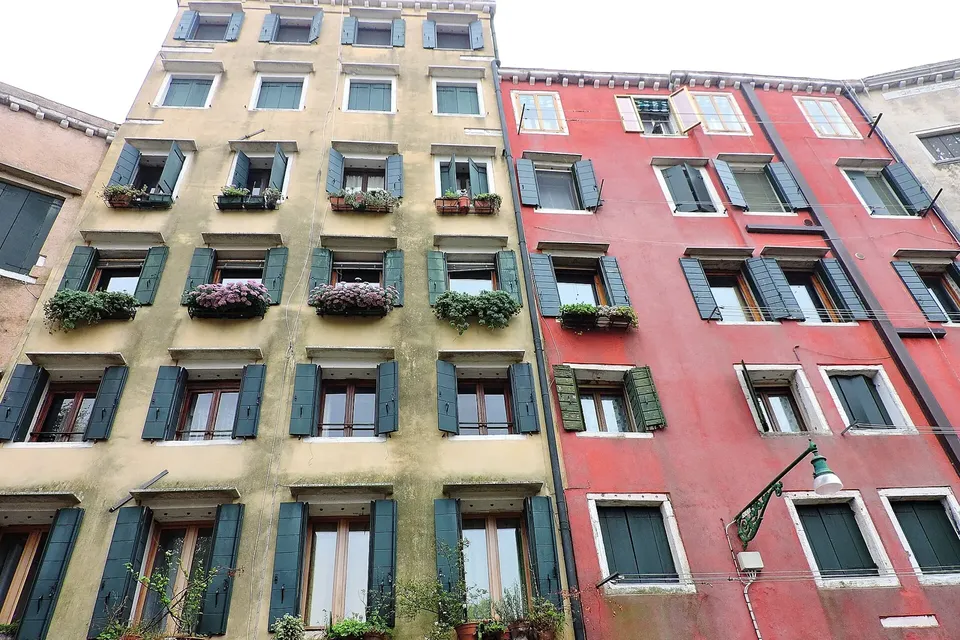
The word "ghetto" entered the world's languages from a small island in the Cannaregio district of Venice. On 29 March 1516 the Venetian Senate ordered the city's Jews to live there, behind gates locked at night. For almost three centuries the Ghetto was a place of segregation and, at the same time, one of the liveliest Jewish centres in Europe.
Key dates
- 1386: Venice grants Jews land on the Lido for a cemetery.
- 1509–1513: Jews from the mainland take refuge in Venice during the War of the League of Cambrai.
- 29 March 1516: decree confining Jews to the Ghetto Nuovo.
- 1541: the adjacent Ghetto Vecchio is assigned to Levantine Jewish merchants.
- 1633: the Ghetto Nuovissimo is added.
- 1797: the Republic falls; the separation of the Ghetto is abolished on 11 July.
Before the Ghetto
Jews had long traded in Venice, but for most of the Middle Ages the Republic did not allow them to settle permanently in the city. From 1382 it admitted Jewish moneylenders under temporary agreements called condotte, which fixed interest rates and conditions of residence. Jewish lenders and merchants lived mainly on the mainland, in Mestre and in towns such as Padua, and came into the city for limited periods. In 1386 the Republic nevertheless granted them land at San Nicolò on the Lido for a cemetery, which is still there (see our article on the old cemetery).
The turning point came with the War of the League of Cambrai. When the armies of the League overran the Venetian mainland in 1509, Jewish refugees fled into the city with everyone else. Venice found their presence useful: Jewish pawnbanks provided credit to the poor, and Jewish merchants paid taxes. But many Venetians, preachers in particular, objected to Jews living freely among Christians.
The decree of 1516
The compromise adopted by the Senate on 29 March 1516, under Doge Leonardo Loredan, was to allow Jews to live in Venice but to concentrate them in one place. The site chosen was an island in Cannaregio that had once housed a public copper foundry; in Venetian, the casting of metal was a getto, and the area was already known as the "ghetto". The island was surrounded by canals, so it could be closed easily. Gates were installed at its entrances, opened at dawn and locked at night, and Christian guards were posted, paid for by the Jews themselves. Boats patrolled the canals. Around 700 Jews moved in.
Several scholars think the name came from the foundry's getto; others have proposed different etymologies. Whatever its origin, the word spread across Europe, and by the late sixteenth century it was used for enclosed Jewish quarters in other Italian cities and beyond.
A city of "nations"
The Ghetto was never a single, uniform community. Its inhabitants were organised by "nations" (nazioni), each with its own legal status and economic role.
- The Germans (Tedeschi), Ashkenazi Jews from northern Europe and Italian Jews long settled in the Venetian territories, were the first group and ran the pawnbanks under the condotte.
- The Levantines (Levantini), Jewish merchants who were subjects of the Ottoman Empire, came to trade between Venice and the eastern Mediterranean. In 1541 they were given the Ghetto Vecchio, the "old ghetto" next door, named after an older foundry site.
- The Westerners (Ponentini), Sephardic families of Spanish and Portuguese origin, many of them descendants of converts who returned to Judaism, were admitted from the 1580s and made important contributions to long-distance trade.
Each nation built its own synagogues, or scole, inside the Ghetto. Five survive, still known by the names of the communities that founded them (see the five synagogues). A Jewish governing body, the "University of the Jews", negotiated with the Republic, collected taxes and administered communal affairs.
Growing upward
As the population grew, the Ghetto could not spread. In 1633 a third area, the Ghetto Nuovissimo, was added, but space remained short. The answer was to build up. Houses around Campo del Ghetto Nuovo rose to seven or eight floors, with low ceilings, far higher than most Venetian buildings of the time. The population is thought to have peaked in the seventeenth century, at several thousand people living in a few hectares.
Life inside and outside the walls
Segregation was real. Jews had to wear a distinctive badge or hat, yellow and later red; they could not own real estate; most professions were closed to them, apart from moneylending, trade in second-hand goods and medicine. Being found outside after curfew could bring heavy penalties.
Yet the walls were porous. Jewish doctors attended Christian patients, Christians visited the Ghetto's synagogues to hear famous preachers, and Christian printers employed Jewish scholars to produce Hebrew books for the whole Jewish world (see our article on the Jewish book in Venice). Music, theatre and literary salons crossed the boundary too: the rabbi Leon Modena and the poet Sara Copio Sullam corresponded with Christian writers and patrons.
Decline and the opening of the gates
In the eighteenth century the Ghetto's fortunes declined with those of Venice. Trade shifted to the Atlantic, taxes and forced loans weighed on the community, and its population fell. In May 1797 the Republic surrendered to Napoleon's army. On 11 July 1797 the gates were torn down and burned in Campo del Ghetto Nuovo, and Jews were declared free to live anywhere in the city.
Emancipation was not linear. Under Austrian rule, from 1798 with interruptions until 1866, some restrictions returned, and full civil equality came only with Venice's annexation to the Kingdom of Italy. Over the nineteenth century, many families moved out of the Ghetto into other parts of the city, while the synagogues and communal institutions remained there.
The Ghetto today
The Jewish community of Venice now numbers a few hundred people, and only a minority live in the Ghetto. The area remains its centre, with the synagogues, the Jewish Museum, a rest home, kosher food and the memorials to the deportations of 1943–1944 (see the Shoah in Venice). In 2016 the city marked the five hundredth anniversary of the decree with exhibitions, concerts and a performance of The Merchant of Venice staged in the Ghetto itself.
Sources
- Wikipedia, "Venetian Ghetto" (decree, gates and guards, 1797).
- Wikipedia, "History of the Jews in Venice" (1382, 1386, 1516, population).
- Jewish Encyclopedia (1906), "Venice".
- Benjamin Ravid, "The Venetian Government and the Jews", in R. C. Davis and B. Ravid (eds.), The Jews of Early Modern Venice, Johns Hopkins University Press, 2001.
- Riccardo Calimani, The Ghetto of Venice, M. Evans, 1987 (Italian original: Storia del ghetto di Venezia, Rusconi, 1985).
 Places & institutions
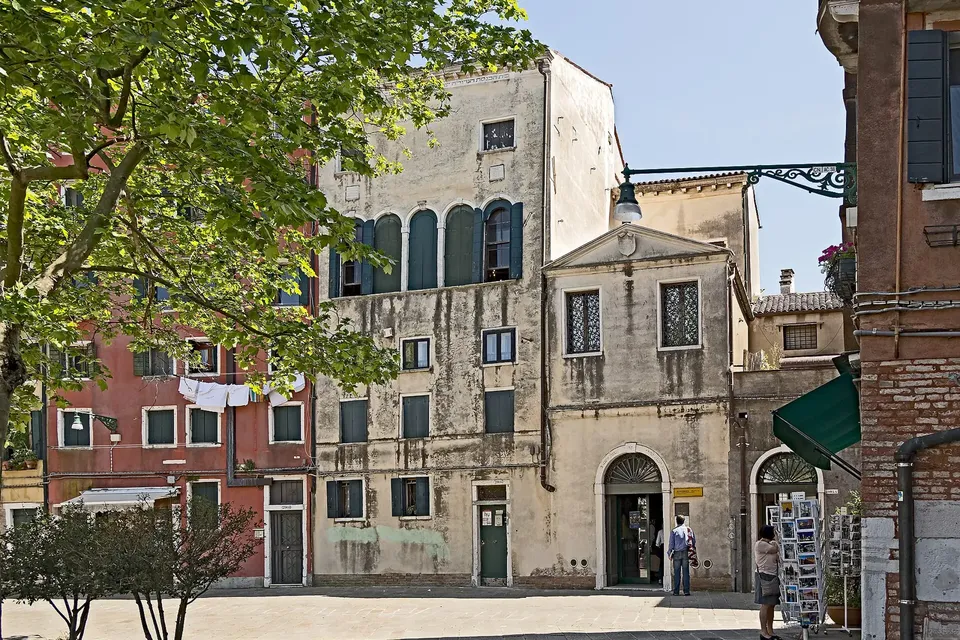
The five synagogues
Hidden behind ordinary facades: the German, Canton, Italian, Levantine and Spanish scole.
 Ghetto history
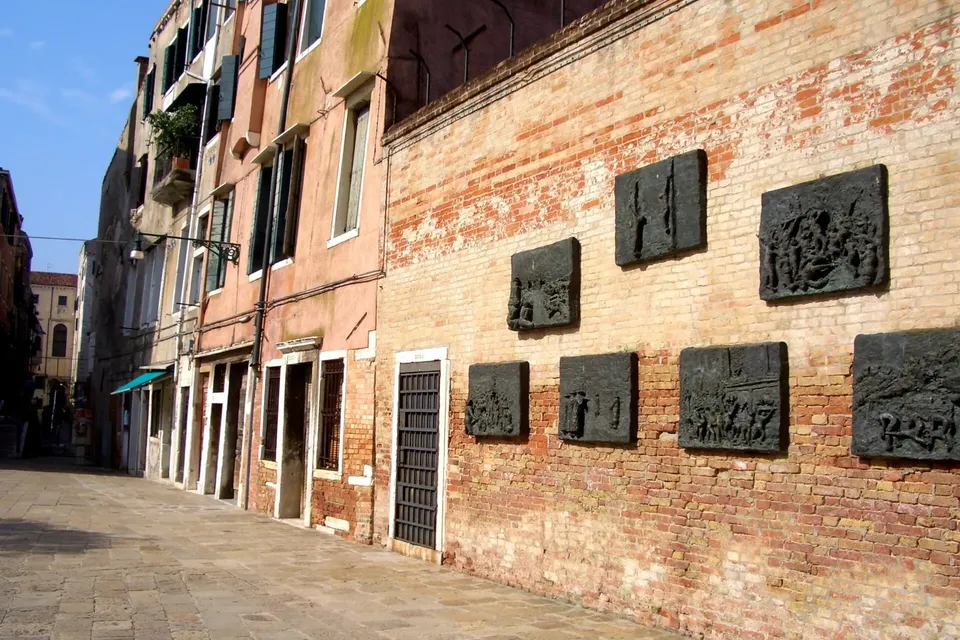
The Shoah in Venice
The racial laws, Giuseppe Jona's refusal, the arrests of 5 December 1943 and the memorials of Campo del Ghetto Nuovo.
 Places & institutions
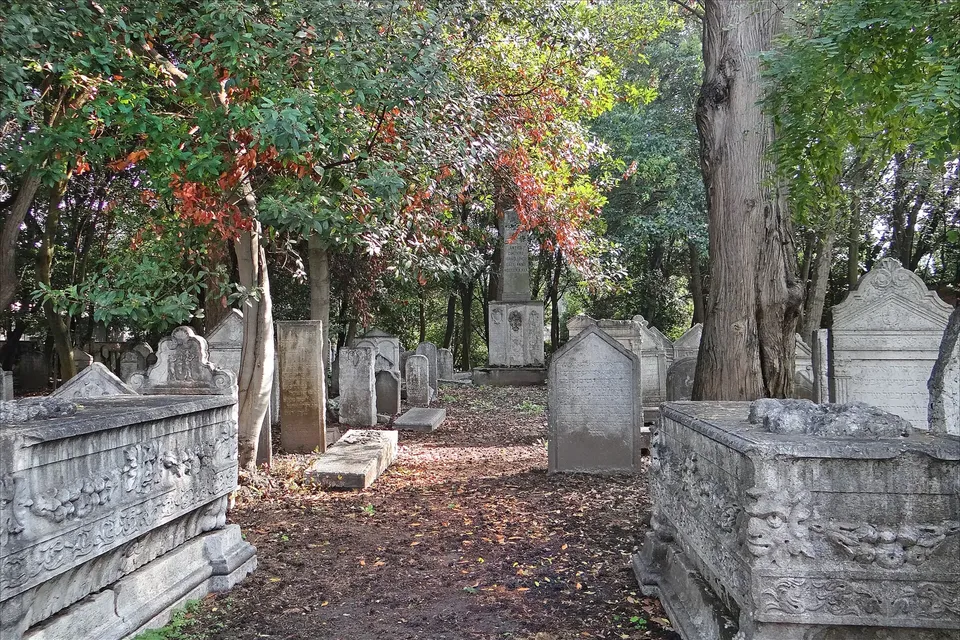
The old Jewish cemetery on the Lido
A plot granted in 1386, a burial recorded in 1389, more than a thousand stones and a restoration completed in 1999.