Books & Haggadah
Hebrew printing in Venice, censorship and burning, the 1609 Venice Haggadah and the New Venice Haggadah of our century.
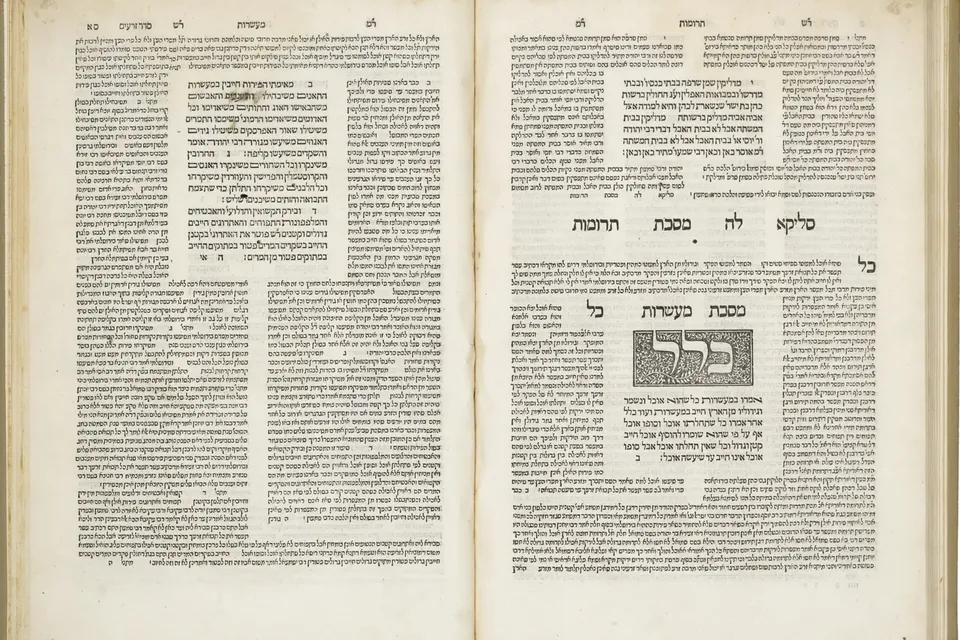
For about a century, Venice was where much of the Hebrew-reading world got its books. This section follows those books from the workshop to the reader and to the censor. It starts in 1516, when the Antwerp-born merchant Daniel Bomberg issued the first Hebrew book printed in the city, and it runs through the great editions that still shape Jewish study today: the Rabbinic Bible of 1517–1518 and the complete Babylonian Talmud of 1519–1523, whose page layout and folio numbers are still used.
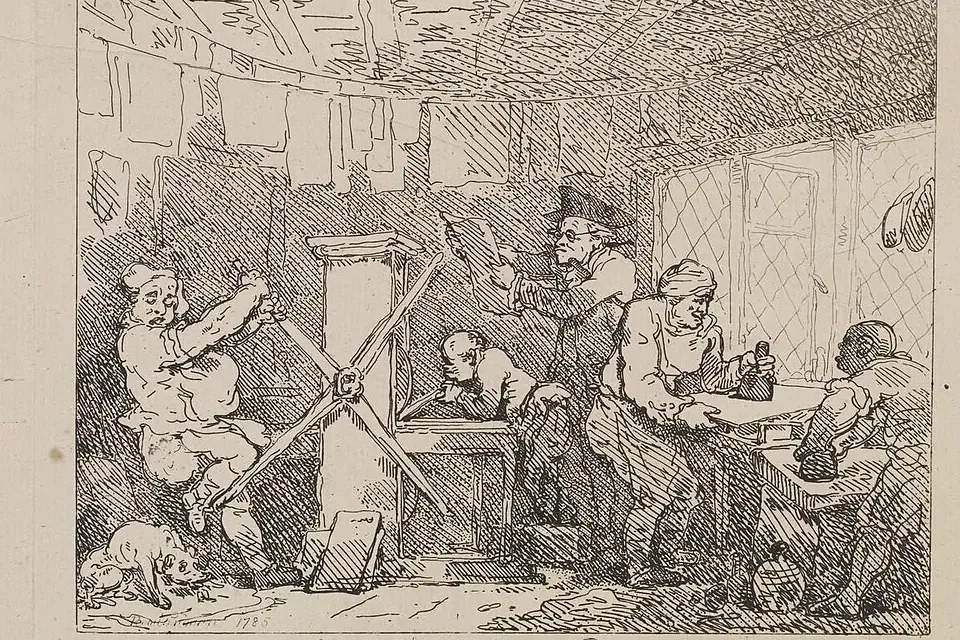
Venetian Hebrew printing was a partnership. Christian patricians and entrepreneurs (Bomberg, Marco Antonio Giustiniani, Alvise Bragadin, Giovanni di Gara) owned the presses and held the privileges granted by the Senate, while Jewish scholars, typesetters and proofreaders prepared the texts. It was also a story of rivalry and repression: the quarrel between Bragadin and Giustiniani in 1550, the papal condemnation of the Talmud in 1553, the ban on Hebrew books decreed by the Council of Ten in 1554, and the censors who went through Venetian editions page by page in the decades that followed.
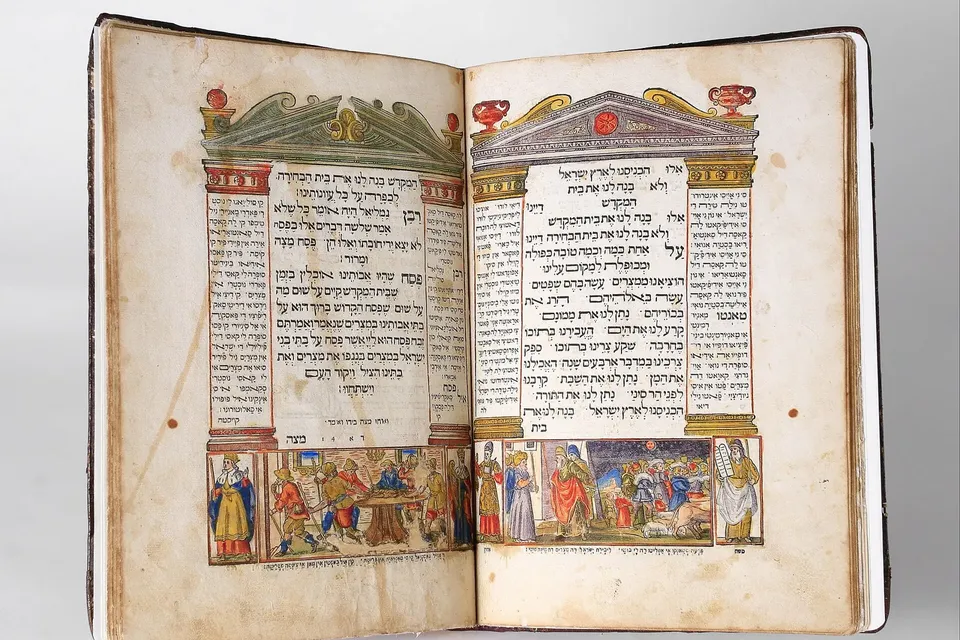
The best-known book of all is the illustrated Venice Haggadah of 1609, issued in versions accompanied by a Judeo-Italian, Ladino or Yiddish translation, and answered four centuries later by the artists of the New Venice Haggadah. Our articles on the 2016 exhibition and the 1609 book and on the New Venice Haggadah project tell that story, while the Jewish book in Venice looks at the book as history, technology and metaphor, and Hebrew printing in numbers gives the dates, bans and figures in one place, with downloadable data.
Every article in this section names its sources: the national biographical dictionary of Italy, the Italian census of sixteenth-century editions, digitised copies in public libraries, and the catalogues of the museums and libraries that hold Venetian Hebrew books today. Where the sources disagree, we say so.
- Hebrew printing in Venice, 1516–1610, in numbers: presses, dates, bans, and what the Italian census misses
A dated, sourced timeline of the Hebrew presses of Venice from Bomberg's first book in 1516 to Giovanni di Gara's death in 1609, with the ban of 1554, the seizure of 1568, and a check against EDIT16, the Italian census of sixteenth-century editions, which records only 49 Venetian Hebrew editions. Charts, method and CSV files.
- Sarra Copia Sullam's Manifesto of 1621: how a Jewish poet of the Ghetto answered a charge of heresy in print
In 1621 Baldassarre Bonifacio, a regular at her salon in the Ghetto, accused the Venetian poet Sarra Copia Sullam in print of denying the immortality of the soul. Her reply, the Manifesto di Sarra Copia Sulam hebrea, written in days and dedicated to her father, is one of the rare printed books by a Jewish woman of early modern Italy. The quarrel, the book, and where to read it today.
- The Jewish book in Venice: histories, media, metaphors
How Venice became the capital of Hebrew printing in the sixteenth century, from Daniel Bomberg's Talmud to the burning of 1553 and censorship, and why the book became a metaphor for Jewish life.
- The New Venice Haggadah exhibition of 2016, and the 1609 book behind it
A look back at the 2016 display of the New Venice Haggadah etchings at the Jewish Museum of Venice, and at the 1609 Venice Haggadah whose images they answered.
- The New Venice Haggadah project: eight artists answer a book of 1609
How eight artists spent a residency in Venice in 2015 making etchings in dialogue with the 1609 Venice Haggadah, and how the project became a printed Haggadah in 2021.