The New Venice Haggadah exhibition of 2016, and the 1609 book behind it
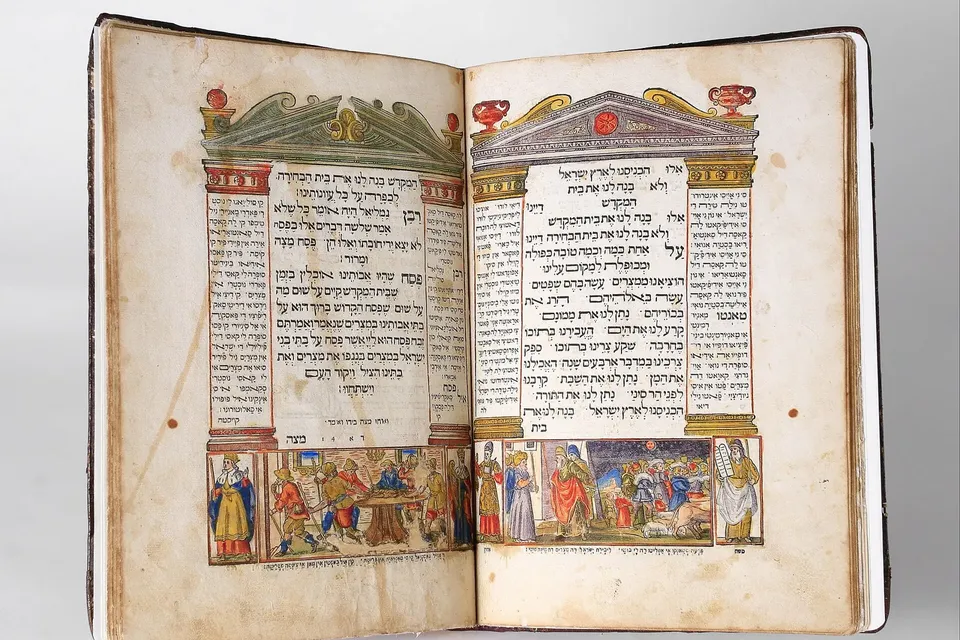
In April 2016, a few weeks after Venice marked five hundred years since the creation of its Ghetto, the Jewish Museum in Campo del Ghetto Nuovo hung a set of new etchings made for a modern Haggadah. This is an account, after the fact and from published sources, of what was shown, how the prints related to the famous Venice Haggadah of 1609, and where the project went next.
This page is a retrospective written by an independent publication. The exhibition described here closed in 2016; it is not an announcement of a current or future event.
What was on the walls
The display presented the 24 etchings produced in October 2015 by eight artists during a residency at the Scuola Internazionale di Grafica, the printmaking school a few steps from the Ghetto (see our article on the project itself). The Jewish Telegraphic Agency, in a report republished by the Times of Israel on 19 April 2016, described an unveiling ceremony held on a Sunday at the Jewish Museum of Venice and said the prints would remain on show there until 31 July. The printmaking school's own notice of 17 April 2016 likewise said the etchings were being exhibited at the Jewish Museum.
Each artist had been given a portion of the Haggadah text and asked for three plates. Hung together, the prints therefore followed the order of the Seder: the opening blessings and the four questions, the four children, the story of slavery and the plagues, the songs of praise and the cumulative nursery rhyme "Chad Gadya" that ends the evening. The sequence allowed visitors to read the exhibition as they would read the book, from beginning to end.
The book they were answering
The prints were conceived as a reply to a specific object. The Venice Haggadah of 1609 was printed in the workshop of Giovanni di Gara, a Christian printer who produced a large share of Venice's Hebrew books at the turn of the seventeenth century, for the publisher and corrector Israel ben Daniel Zifroni. It was issued in versions that set the Hebrew text beside a translation into one of the vernaculars of the Ghetto: Judeo-Italian for the Italian Jews, Judeo-Spanish for the Levantine and Western Sephardim, Judeo-German for the Ashkenazim. The book was, in that sense, a portrait of the Ghetto's linguistic map.
Its pages are framed by an architectural border of columns and arches, a convention borrowed from Renaissance title pages. Woodcut vignettes run through the text: the household preparing for Passover, the search for leaven, the four children, Moses and Pharaoh, the ten plagues, the crossing of the sea and, near the end, a view of a rebuilt Jerusalem and its Temple. The images were cheap to reproduce and easy to copy, which is why versions of them reappear in Haggadot printed in other cities long afterwards. Some surviving copies, such as the one reproduced at the top of this page, had their woodcuts coloured by hand.
The Italian Jewish monthly Pagine Ebraiche noted in February 2016 that a copy of the 1609 Haggadah is displayed at the U. Nahon Museum of Italian Jewish Art in Jerusalem, where the new project had been presented. The old book and the new prints were thus shown, at different moments, in the two cities most closely tied to the project.
How the new etchings differed
Set side by side, the two series differ in at least three ways.
- Technique. The 1609 images are woodcuts, cut in relief and printed with the type. The new images are etchings, bitten into copper and printed separately on a press, which allows finer lines and tonal effects.
- Authorship. The seventeenth-century woodcuts are anonymous workshop images. The 2016 prints were signed by named artists with distinct styles, from dense calligraphic work to collage-like compositions.
- Role. The old woodcuts mostly illustrate: they show what the text says. Many of the new prints comment: they juxtapose the Exodus story with Venice, its carnival masks, its water and the walls of the Ghetto, and invite discussion around the table.
An exhibition inside a commemoration
The display was one of many events of the Ghetto's anniversary year. The official commemorations opened at the end of March 2016, and the JTA report presented the Haggadah prints as part of that programme. The setting mattered. The Jewish Museum stands in Campo del Ghetto Nuovo between two of the oldest synagogues of the city, the Scola Grande Tedesca and the Scola Canton, in the island where Venetian Jews had been confined from 1516. Showing a book about the Exodus in that place made the anniversary's double meaning, of confinement and of cultural flourishing, unusually concrete. Our article on the Jewish Museum of Venice describes the building and its history, including its reopening in October 2026 after a long renovation.
After the walls: from etchings to a book
Exhibition and book were always meant to be two stages of the same project. The 2016 announcements spoke of complete sets of original prints for collectors and of a printed Haggadah for families. The book appeared in 2021, published in Venice by Damocle Edizioni with a new English translation by the art historian Marc Michael Epstein, who had led the artists' study sessions in 2015. Reproduced in a volume meant to be used at the Seder, the etchings left the museum wall and returned to the table, which is where the Venetian printers of 1609 had always intended their images to be seen.
Seeing the 1609 Haggadah today
Copies of the 1609 edition survive in several research libraries, and some have been digitised. The National Library of Israel and Yale University Library are good starting points for readers who want to look at the woodcuts page by page. In Venice itself, the Jewish Museum's collections of books and ritual objects, and the Renato Maestro library and archive of the Jewish community, are the places to ask about Venetian Hebrew printing. Opening hours and access conditions change, so check with the institutions before planning a visit.
Sources
- JTA and Times of Israel staff, "Venice Haggadah gets facelift for 500th anniversary", 19 April 2016.
- Scuola Internazionale di Grafica di Venezia, "New Venice Haggadah", 17 April 2016.
- Rossella Tercatin, "A New Venice Haggadah", Pagine Ebraiche International, 21 February 2016.
- Luisella Romeo, "The New Venice Haggadah", SeeVenice, 20 March 2021.
- Wikimedia Commons, the Venice Haggadah, 1609 (Google Art Project).
- Wikipedia, "Jewish Museum of Venice".

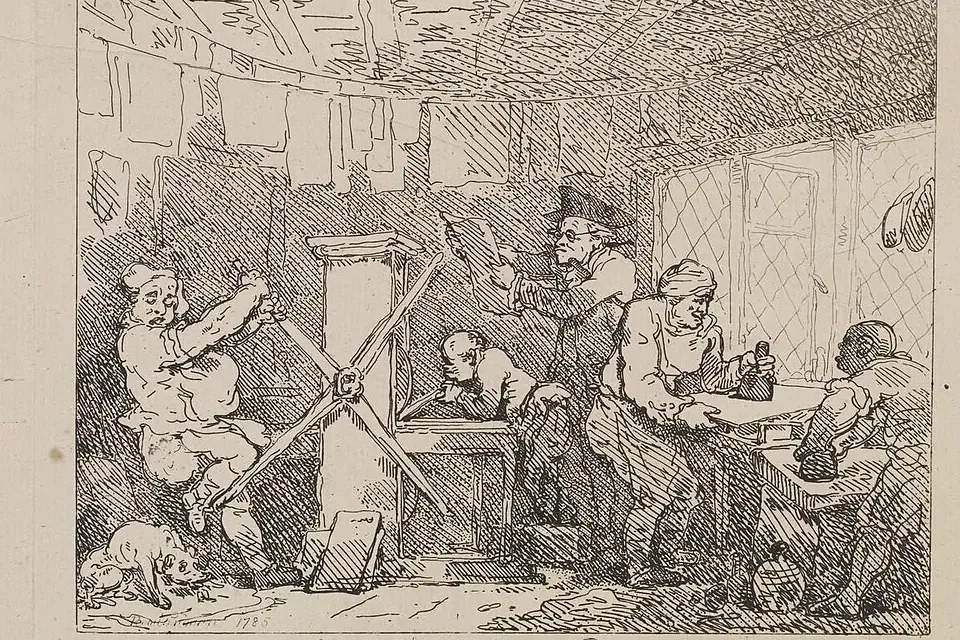 Books & Haggadah
The New Venice Haggadah project
Eight printmakers, a three-week residency and a famous Haggadah of 1609: the story of a Ghetto-anniversary book.
 Places & institutions
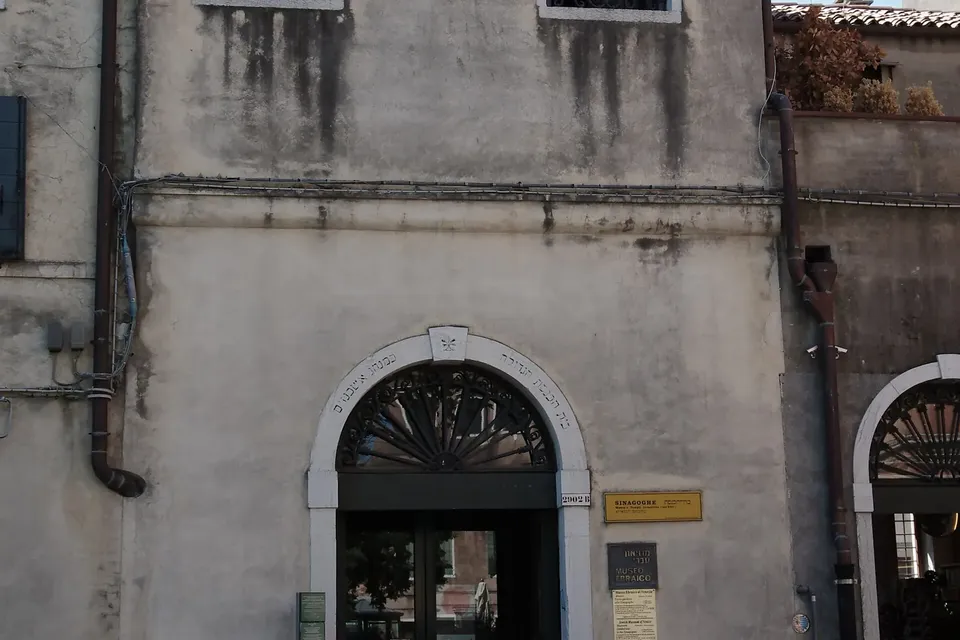
The Jewish Museum of Venice
Founded by the community after the war, closed for seven years, reopened in October 2026 with a route through all five synagogues.
 Books & Haggadah
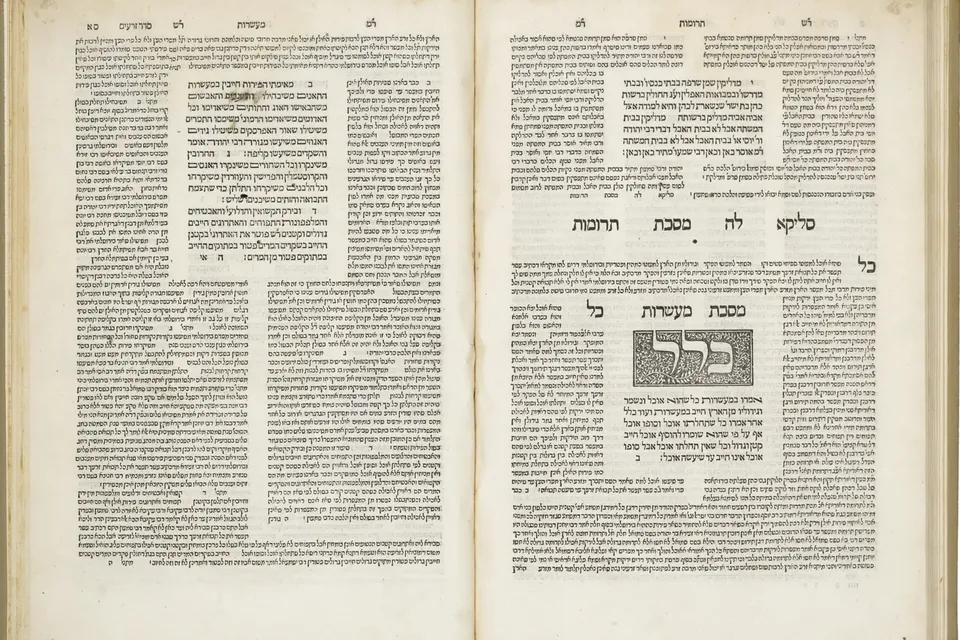
The Jewish book: histories, media, metaphors
Bomberg's Talmud, the bonfire of 1553, the censors' pens and the idea of the book as a portable homeland.