The New Venice Haggadah project: eight artists answer a book of 1609
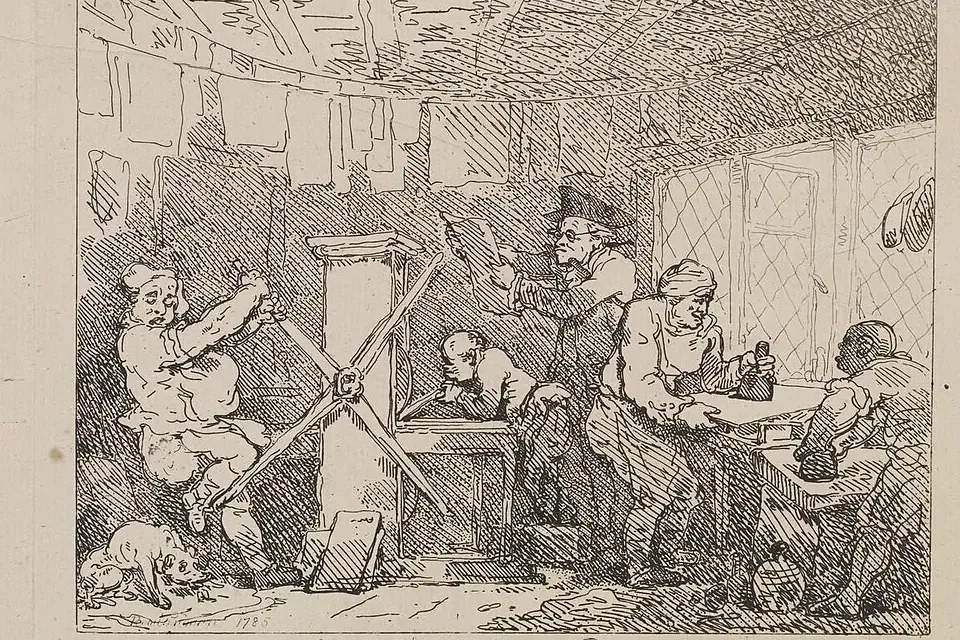
In the autumn of 2015, eight printmakers from several countries came to Venice to make new pictures for one of the oldest stories Jews tell each year. Their starting point was a Passover Haggadah printed in the city in 1609. Their result, after exhibitions, delays and a long editorial process, was a new illustrated Haggadah published in 2021. This article reconstructs the project from published sources.
In brief
- What: a set of 24 etchings by eight artists, each responding to part of the Haggadah text, later bound into a book.
- When: residency in Venice in October 2015; first public display in April 2016; book published in 2021.
- Who: head artist Jacqueline Nicholls with Andi Arnovitz, Josh Baum, Yael David-Cohen, Nathan Gotlib, Sophie Herxheimer, Kyra Matustik and Hillel Smith; art historian Marc Michael Epstein as scholar in residence.
- Why then: it was one of the cultural projects tied to the 500th anniversary of the Venice Ghetto, created by decree on 29 March 1516.
A book read at home, a city that printed it
The Haggadah is the text recited around the table at the Passover Seder. It tells the story of the Exodus through questions, quotations from the Bible and the rabbis, songs and blessings, and it has been illustrated for centuries because it is meant to be shown to children as much as read by adults. Before printing, illuminated Haggadot were luxury manuscripts. From the sixteenth century, printers in Italy, and especially in Venice, made illustrated Haggadot available to a much wider public.
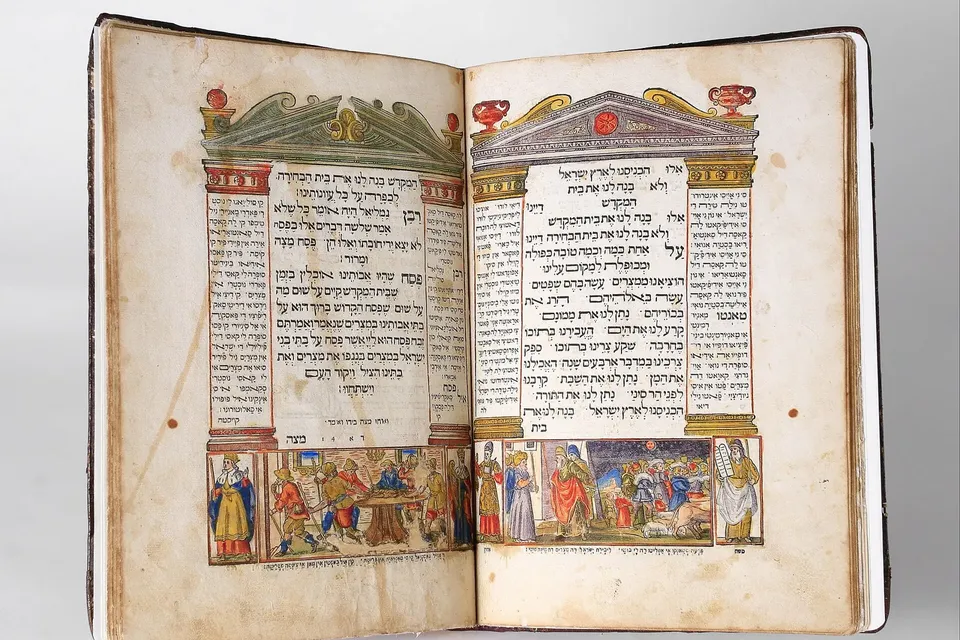
The edition of 1609 is the one most people mean when they speak of "the Venice Haggadah". It was printed in the workshop of Giovanni di Gara for the publisher and proofreader Israel ben Daniel Zifroni, and it came out in several versions: the Hebrew text was accompanied by a translation into Judeo-Italian, Judeo-Spanish (Ladino) or Judeo-German (Yiddish), the everyday languages of the different Jewish "nations" living side by side in the Ghetto. Its woodcuts, with scenes of the Seder, the plagues and the Temple, were copied and adapted by later printers for generations. An article in this section looks more closely at that book and at how its images and the new etchings were shown in 2016.
The idea: live, learn and create in Jewish Venice
The project was proposed by Beit Venezia, a cultural organisation launched in 2015 by the Venice Center for International Jewish Studies (our article on how Beit Venezia began gives the background). Its director at the time, Shaul Bassi, a professor of English literature at Ca' Foscari University, described the aim to the Jewish Telegraphic Agency in a phrase that summed up the whole programme: the artists were to "live, learn and create in Jewish Venice".
The practical partner was the Scuola Internazionale di Grafica, a printmaking school that has its studios near Campo del Ghetto Nuovo. The school's own account explains that the eight artists worked in its studios for three weeks, alongside its students and other residents, using the 1609 Haggadah as their inspiration. The technique was intaglio: designs bitten into copper plates with acid and printed on damp paper under a rolling press, a process that has changed little since the seventeenth century.
Eight artists, three plates each
According to the Italian Jewish monthly Pagine Ebraiche and the printmaking school, the group was led by the London artist Jacqueline Nicholls, known for work that reads closely into traditional Jewish texts. She was joined by Andi Arnovitz (United States and Israel), Josh Baum (United Kingdom), Yael David-Cohen (Israel and United Kingdom), Nathan Gotlib (Belgium), Sophie Herxheimer (United Kingdom), Kyra Matustik (Sweden) and Hillel Smith (United States). They differed in age, background and style: some were illustrators, some calligraphers or sculptors, some had made Judaica before and some had not.
The Haggadah text was divided among them, and each artist was asked to produce three etchings for a portion. The result was a series of 24 prints. Published descriptions mention a few of the choices: Hillel Smith, a typographer and muralist, took the "Ma Nishtana", the four questions asked by the youngest at the table; Andi Arnovitz's "four children" drew on the masks of the Venetian carnival; Josh Baum illustrated the closing song "Chad Gadya", which later became the cover of the book.
A week of study before the first cut
The residency did not begin in the studio. The artists first spent a period of orientation with Marc Michael Epstein, a professor at Vassar College and a specialist in Jewish visual culture and illustrated Haggadot. The sessions covered the history of the Haggadah, the ways medieval and early modern artists had interpreted its text, and the specific world of the Venetian Ghetto: its synagogues, its printers, and its mix of Italian, Ashkenazi, Levantine and Western Sephardi communities. Epstein later wrote the new English translation that accompanies the etchings in the published book.
This sequence matters for understanding the prints. They are not a facsimile of 1609, nor modern copies of its woodcuts. They are commentary: the artists were asked to respond to the old book and to the city, and to add a layer of interpretation in the way the rabbinic tradition adds layers of commentary around a text.
From prints to book
Early announcements set ambitious targets. In 2016 the printmaking school wrote that a published Haggadah would be ready for Passover 2017, and Pagine Ebraiche reported that the book would be printed in Jerusalem. The plan also included a small number of complete sets of original prints for collectors and a commercial edition.
The book took longer. It finally appeared in 2021 as The New Venice Haggadah, published in Venice by Damocle Edizioni, a small independent press run by Pierpaolo Pregnolato, with Shaul Bassi and Pregnolato as editors, a preface by Bassi and Epstein's translation. The National Library of Israel catalogue records the 2021 edition. A March 2021 article by the Venetian guide Luisella Romeo describes a book designed to be used at the table, with new paper, binding and layout, and notes that it deliberately does not imitate the 1609 volume.
Why a new Haggadah for an old anniversary
Commemorations of the Ghetto's five hundredth anniversary in 2016 had to deal with a paradox. The Ghetto was a place of enforced segregation, locked at night and guarded at the expense of its residents. It was also, for almost three centuries, one of the most productive centres of Jewish learning and printing in Europe. A project built on a Haggadah, the book of the Exodus and of liberation, read in a city that had confined its Jews, carried that tension in its very subject.
It also connected the Ghetto's past to a living practice. Haggadot are not museum objects; families still buy, use and stain them every spring. By ending in a usable book, rather than only in an exhibition, the project returned to the logic of the Venetian printers who first put illustrated Haggadot into ordinary households.
What we do not know
Published sources differ on some details: one account speaks of a four-week rather than a three-week residency, and the number and fate of the collectors' sets of prints are not documented in the sources we could check. We have kept to what at least two independent sources confirm, and we will correct this article if better documentation appears.
Sources
- Scuola Internazionale di Grafica di Venezia, "New Venice Haggadah", 17 April 2016.
- Rossella Tercatin, "A New Venice Haggadah", Pagine Ebraiche International, 21 February 2016.
- JTA and Times of Israel staff, "Venice Haggadah gets facelift for 500th anniversary", 19 April 2016.
- Luisella Romeo, "The New Venice Haggadah", SeeVenice, 20 March 2021.
- National Library of Israel, catalogue record of The new Venice Haggadah (2021).
- Wikipedia, "Venetian Ghetto" (decree of 29 March 1516).
 Books & Haggadah
The 2016 New Venice Haggadah exhibition
Twenty-four etchings on the walls of the Jewish Museum in the Ghetto's anniversary year, and the woodcuts of 1609 that inspired them.
 Books & Haggadah
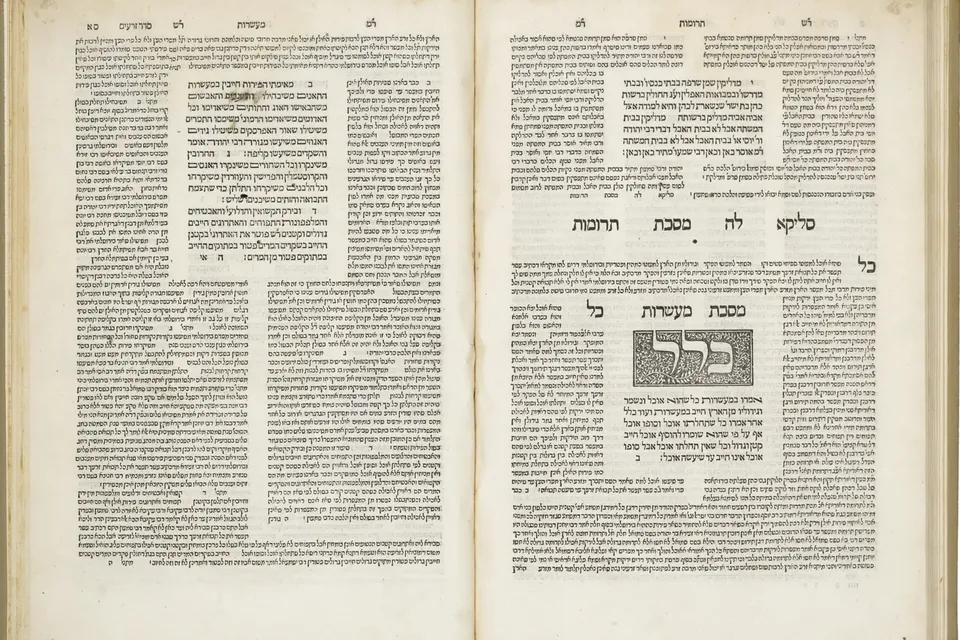
The Jewish book: histories, media, metaphors
Bomberg's Talmud, the bonfire of 1553, the censors' pens and the idea of the book as a portable homeland.
 Ghetto history
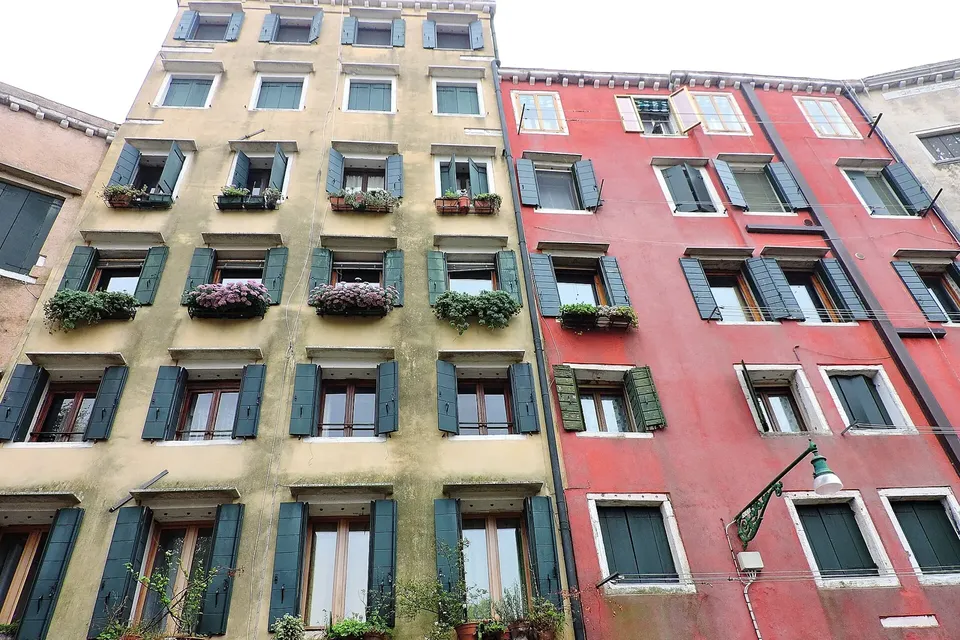
The Ghetto, 1516–1797
From the Senate decree of 29 March 1516 to the opening of the gates in July 1797.