Beit Venezia, “a home for Jewish culture”: how it was launched in 2015
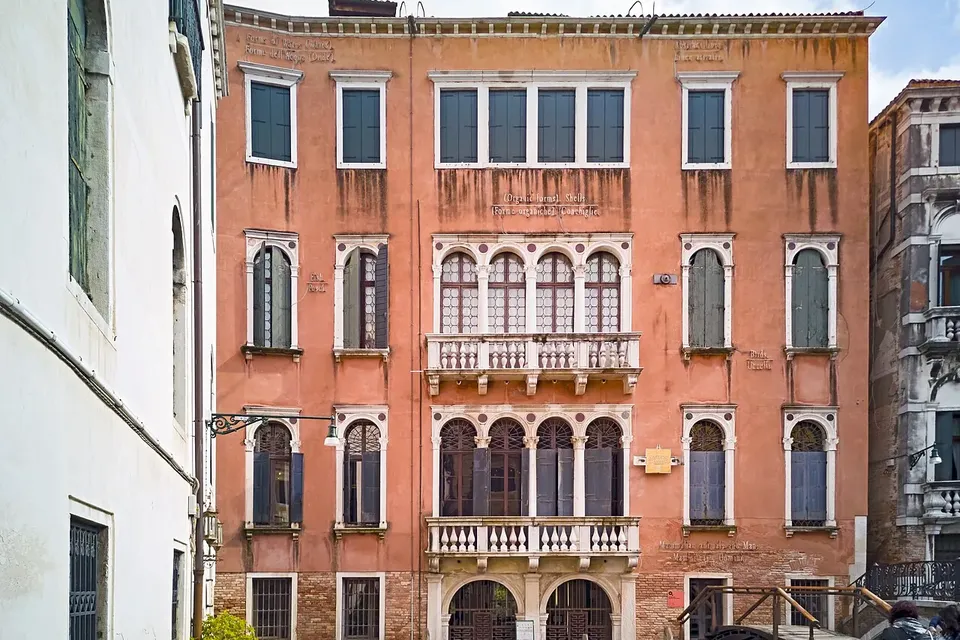
Beit Venezia, Hebrew and Italian for "the house of Venice", is a cultural organisation devoted to Jewish Venice. It was presented to the public in February 2015, the year before the Ghetto's five hundredth anniversary. This article, written by an independent publication with no connection to the organisation, retraces how it began and what it set out to do.
Sotoportego is not Beit Venezia and does not speak for it. The organisation has its own website; readers looking for its current programme, publications or contact details should go there. The launch described below took place in 2015.
A name and an idea
The word beit (from Hebrew bayit, house) is familiar from the names of synagogues, study houses and Jewish community centres around the world. Joined to the name of the city, it announced an ambition: to create a house for Jewish culture in Venice that would be open to everyone, Jewish or not, resident or visitor.
The project was promoted by the Venice Center for International Jewish Studies (Centro Veneziano di Studi Ebraici Internazionali), an association founded in the late 2000s by academics from Venice and the United States, with close ties to Ca' Foscari University. For several years the Center had organised lectures, international conferences, summer workshops for young researchers, Hebrew courses and literary encounters. Beit Venezia was meant to gather these activities under a more visible name and to give them a direction for the anniversary year.
Its motto summarised three programmes in three verbs: to live, to learn and to create in Jewish Venice. "Live" pointed to stays, itineraries and courses for people who wanted to experience the Ghetto rather than simply walk through it. "Learn" covered lectures, seminars and study. "Create" referred to residencies for writers and artists, invited to work in the city and respond to its Jewish history.
The launch evening
The opening event was held on 5 February 2015 at the Fondazione Querini Stampalia, a foundation with a library and museum in a palace near Campo Santa Maria Formosa, which co-organised the evening. The first guest was Haim Baharier, a Paris-born scholar of biblical hermeneutics and Jewish thought, the son of Polish survivors of Auschwitz, who had studied with Emmanuel Levinas and Léon Askénazi and who lives and teaches in Italy. He was presenting a recent book, La valigia quasi vuota (Garzanti, 2014), a collection of stories about wandering Jews, in conversation with the designer Giorgio Camuffo and the literary scholar Shaul Bassi, who would direct Beit Venezia.
The choice of venue was itself a statement. The Querini Stampalia is not in the Ghetto but in the Castello district, in a palace that belonged to one of the old patrician families of the Republic. Launching a Jewish cultural house there signalled that Jewish culture was to be presented as part of the city's common heritage, not only as a matter for the few hundred members of the Jewish community.
Why 2015
The timing was dictated by the calendar. On 29 March 1516 the Venetian Senate had ordered that all Jews in the city live together in the Ghetto Nuovo, an island in the Cannaregio district that was walled, gated at night and guarded. Five centuries later, the city, the Jewish community and many cultural institutions were preparing a year of commemorations. Beit Venezia's founders explicitly placed their project in that perspective: the anniversary was an opportunity to recall that the Ghetto had been, for almost three hundred years, both a place of segregation and one of Europe's great centres of Jewish learning, printing and music, and to "relaunch" that vocation in the present.
The programme announced at the launch included regular courses on Jewish culture, guided itineraries, meetings with writers, artists and musicians, and performances. It also anticipated a permanent home in the heart of the Ghetto, to be ready by 2016.
What came after
In the years that followed, the most widely reported Beit Venezia initiatives were residencies and publications. The best known is the New Venice Haggadah, for which eight printmakers spent three weeks in Venice in 2015 and produced 24 etchings, shown at the Jewish Museum in 2016 and published as a book in 2021. The organisation's own website lists later projects of the same kind, among them an illustrated Book of Esther presented as "The New Venice Megillah" (2023), a book on Jewish cuisine (2023), literary and artistic residencies, and a documentary about the old Jewish cemetery (2025). Its early writers in residence included the Austrian novelist and historian Doron Rabinovici.
The model is worth noting because it reverses the usual image of the Ghetto as a place one visits. Residencies bring writers and artists to live there for weeks, and the works they produce, books, prints, films, travel outward again, a little as Venetian Hebrew books once travelled across the Mediterranean.
A house without walls
Unlike the Jewish Museum or the synagogues, a cultural house of this kind is not primarily a building. It exists through programmes, partnerships and people: universities, the Jewish community and its library, the printmaking school, foundations and publishers. That makes it fragile, dependent on funding and on a few individuals, but also flexible. Its history is a useful reminder that Jewish Venice is not only a set of monuments to be preserved, but a place where new work continues to be made.
Where to find reliable information
For current programmes, readers should consult Beit Venezia's own website and the announcements of its partners. For the history of the Ghetto and its institutions, our articles on the Ghetto from 1516 to 1797, the five synagogues and the Jewish Museum give an overview with sources.
Sources
- Beit Venezia, list of projects on the organisation's website (consulted November 2026).
- Luisella Romeo, "The New Venice Haggadah", SeeVenice, 20 March 2021.
- JTA and Times of Israel staff, "Venice Haggadah gets facelift for 500th anniversary", 19 April 2016.
- Fondazione Querini Stampalia, official website.
- Wikipedia, "Venetian Ghetto".
 Books & Haggadah
The New Venice Haggadah project
Eight printmakers, a three-week residency and a famous Haggadah of 1609: the story of a Ghetto-anniversary book.
 Places & institutions
The Jewish Museum of Venice
Founded by the community after the war, closed for seven years, reopened in October 2026 with a route through all five synagogues.
 Ghetto history
The Ghetto, 1516–1797
From the Senate decree of 29 March 1516 to the opening of the gates in July 1797.