The five synagogues of the Venice Ghetto
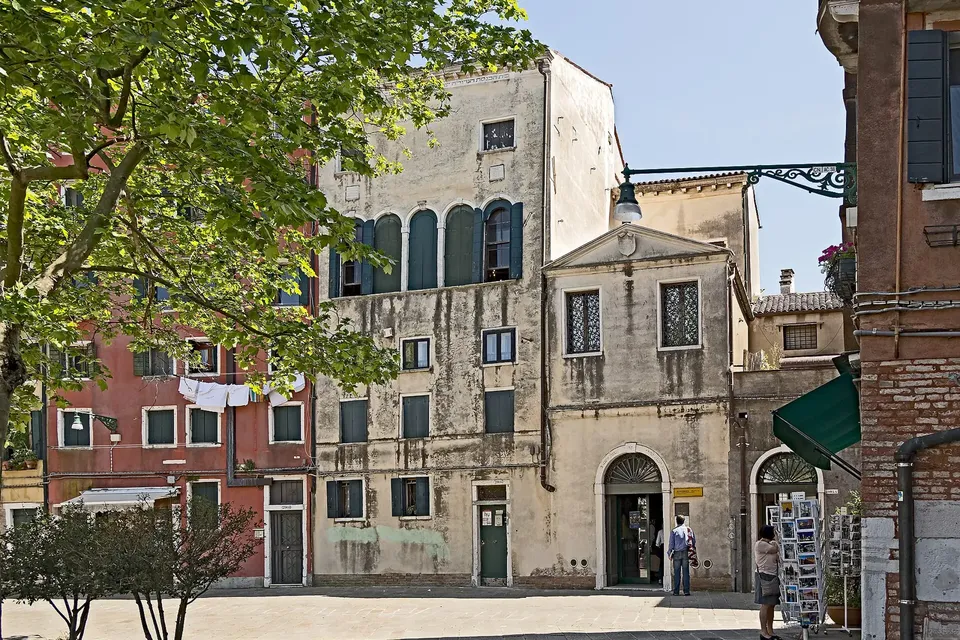
From the outside you could walk past most of them without noticing. The synagogues of the Venice Ghetto occupy the upper floors of ordinary houses, recognisable only by a row of tall windows or a small dome. Inside, five of them preserve some of the finest synagogue interiors in Europe, each built by one of the Ghetto's "nations".
At a glance
- Ghetto Nuovo: Scola Grande Tedesca (1528), Scola Canton (1531–1532), Scola Italiana (1575).
- Ghetto Vecchio: Scola Levantina and Scola Spagnola, founded in the sixteenth century and rebuilt in the seventeenth.
- In use: the Levantina and the Spagnola are used for services; the three others are visited with guided tours run by the Jewish Museum.
Why they are hidden
In Venetian usage a synagogue was a scola (school), like the confraternities known as scuole in the rest of the city. In the Ghetto, the Republic did not allow Jews to build freestanding religious buildings that would stand out in the urban landscape. Space was also scarce. The congregations therefore installed their prayer halls on the top floors of existing buildings, above shops and dwellings, which had a symbolic advantage too: nothing would stand between the worshippers and the sky.
The interiors follow a pattern found in many Italian synagogues. The ark (aron) holding the Torah scrolls and the raised reading platform (bimah or tevah) face each other at opposite ends of the room, with benches running along the long walls between them. Women sat in a gallery above, behind wooden screens. Wealthy families paid for carved wood, gilding, marble and fabrics, so that a plain staircase opens onto a richly decorated hall.
Scola Grande Tedesca (1528)
The oldest synagogue of the Ghetto was founded by the Ashkenazi community in 1528 on the Campo del Ghetto Nuovo. From the square it is marked by five arched windows on the upper floor. The hall is irregular, trapezoidal in plan, because it had to fit into an existing building; the elliptical women's gallery added later disguises the irregularity. The ark and the bimah once stood together at one end, in the Ashkenazi manner, and were separated in a later remodelling. The Jewish Museum of Venice occupies rooms in the same building.
Scola Canton (1531–1532)
A few years later a second Ashkenazi synagogue was built at a corner of the same campo. Its name is usually explained either by its position on a corner (canton in Venetian) or by the name of a family who sponsored it; the question is still debated. From outside, the Canton is recognisable by the small wooden dome or lantern on the roof. Inside, it is known for a series of small painted wooden panels showing episodes from the Bible, such as the crossing of the Red Sea and the giving of the Law, without human figures, an unusual decorative choice. The bimah sits in a deep apse framed by columns.
Scola Italiana (1575)
The Italian Jews, who followed their own ancient rite rather than the Ashkenazi or Sephardi ones, built their synagogue in 1575, also on the Campo del Ghetto Nuovo. It is the simplest of the five, reflecting a community that was generally less wealthy than the others. It can be recognised by five large windows and an inscription on its facade. Inside, light comes from the windows on the square, and the bimah stands on a platform reached by steps, crowned by a small cupola.
Scola Levantina
Across the bridge, in the Ghetto Vecchio, stands the synagogue of the Levantine Jews, merchants from the Ottoman Empire. It was founded in the sixteenth century and rebuilt in the seventeenth, and it is the only one of the five with a facade designed as such, facing a small campiello. Its interior is famous for its carved wooden bimah, a dark, sculptural structure attributed by tradition to the workshop of the Venetian woodcarver Andrea Brustolon, though the attribution is debated. In winter the Levantina is used for services.
Scola Spagnola
The largest synagogue of the Ghetto belongs to the Western Sephardim, Jews of Spanish and Portuguese origin. Its present form dates from a seventeenth-century reconstruction often associated with the circle of the architect Baldassare Longhena. The spacious hall, with its oval gallery, polychrome marble floor and ark framed by columns, shows how prosperous and confident the Ponentine community had become. The Spagnola is used for services in summer and on major festivals.
Common threads
Despite their differences, the five rooms share features that set Venetian synagogues apart. All are on upper floors, reached by stairs from the street. All have their ark and bimah facing each other across the hall, the "bifocal" arrangement typical of Italy. All were remodelled several times between the sixteenth and nineteenth centuries, so that what visitors see today is a layering of periods rather than a single original design. And all were maintained, at great cost, by small congregations long after the end of the Republic, with help in recent decades from international committees for the safeguard of Venice.
Visiting
The synagogues are active places of worship and are visited only on guided tours, run by the Jewish Museum of Venice. After a long renovation, the museum reopened in October 2026 with a new itinerary linking the three synagogues of the Ghetto Nuovo with those of the Ghetto Vecchio. Visitors should check the museum's current schedule, keep in mind that the synagogues are closed to tours on the Sabbath and Jewish holidays, and dress respectfully.
For the history behind the different "nations" that built these rooms, see the Ghetto from 1516 to 1797. The rabbi and preacher Leon Modena drew Christian audiences to sermons given in the Ghetto's synagogues in the early seventeenth century.
Sources
- Wikipedia, "Venetian Ghetto" (the five synagogues and their current use).
- Wikipedia, "Jewish Museum of Venice" (location, synagogue tours).
- Finestre sull'Arte, "Il Museo Ebraico di Venezia riapre dopo sette anni", 20 October 2026 (new itinerary linking the five synagogues).
- Roberta Curiel and Bernard Dov Cooperman, The Venetian Ghetto, Rizzoli, 1990.
- Umberto Fortis, The Ghetto on the Lagoon, Storti, various editions.
 Ghetto history
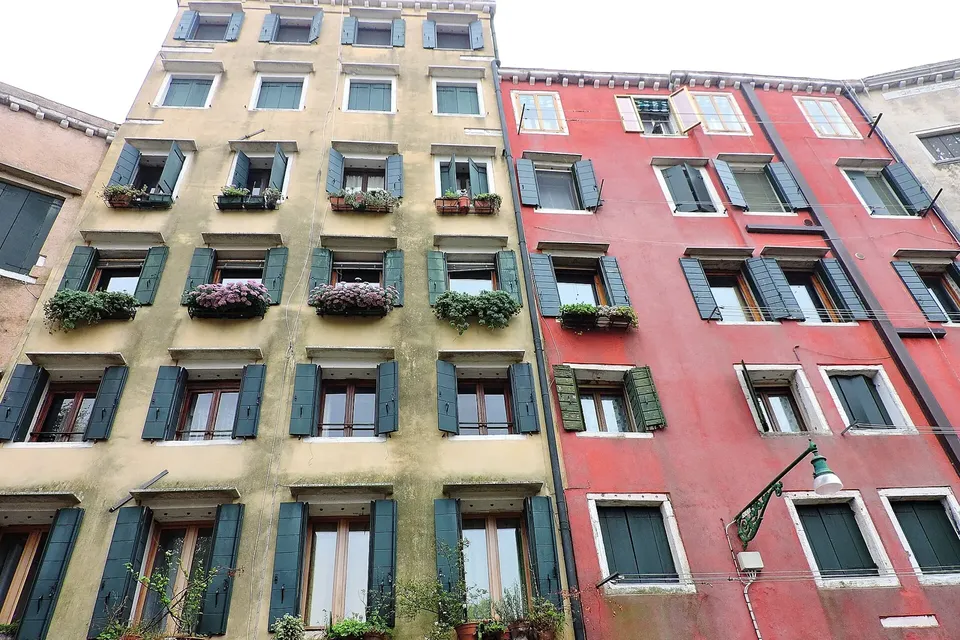
The Ghetto, 1516–1797
From the Senate decree of 29 March 1516 to the opening of the gates in July 1797.
 Places & institutions
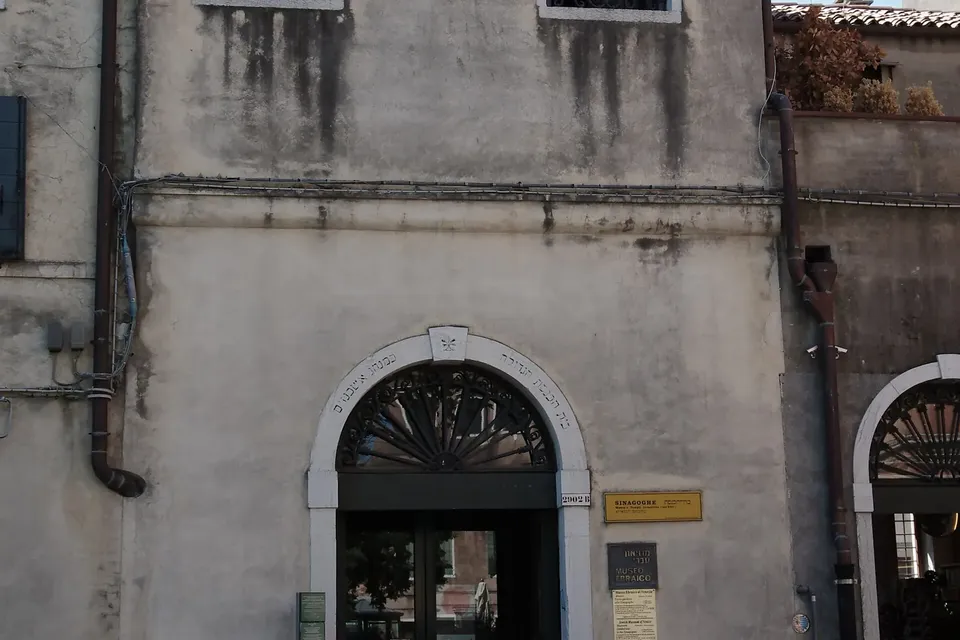
The Jewish Museum of Venice
Founded by the community after the war, closed for seven years, reopened in October 2026 with a route through all five synagogues.
 Lives & letters
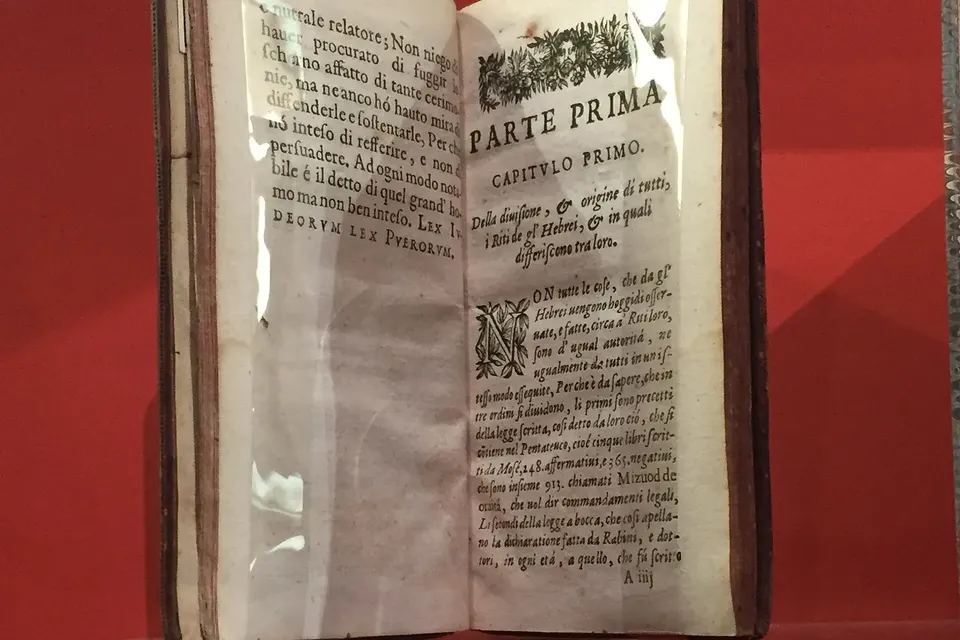
Leon Modena, rabbi of the Ghetto
Sermons that drew Christian audiences, a candid autobiography, and the Historia de' riti hebraici of 1637.