The Jewish Museum of Venice: from a postwar founding to the 2026 reopening
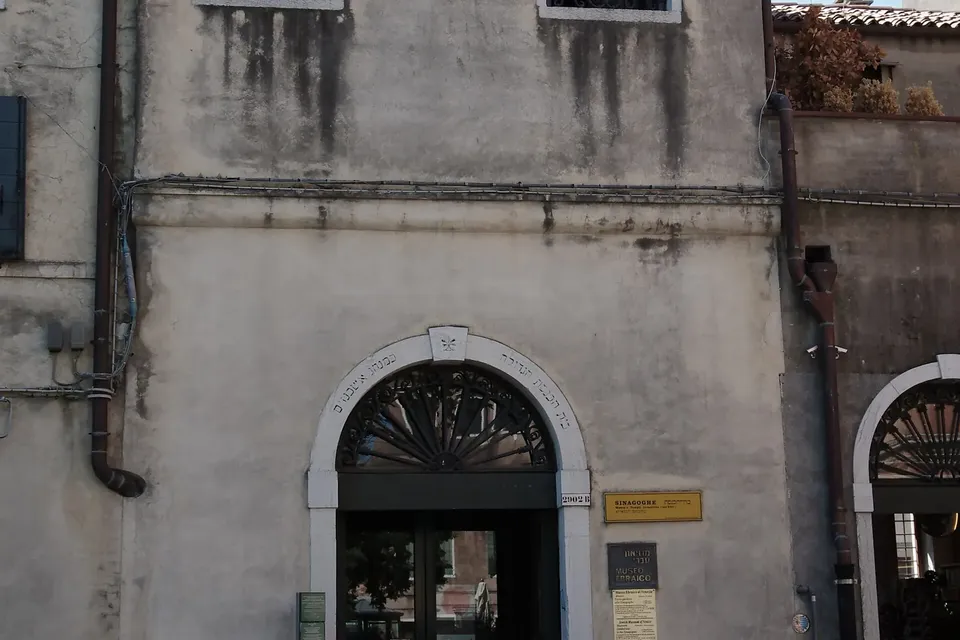
The Jewish Museum of Venice stands on Campo del Ghetto Nuovo, between the two oldest synagogues of the city. It was created by the Jewish community a few years after the Second World War, grew in stages for half a century, closed for a major renovation and reopened on 22 October 2026. Its story is also the story of the people who decided, after the Shoah, that the community's heritage had to be shown.
Key facts
- Founded: in 1953 according to most sources (some give 1954), by the Jewish Community of Venice.
- Founders named in reference works: Cesare Vivante with the rabbis Elio Toaff and Bruno Polacco, at the request of Giovannina Reinisch Sullam and Aldo Fortis.
- Dedicated to: Vittorio Fano, president of the community from 1945 to 1959.
- Reopened: 22 October 2026, after about seven years of closure, with more than 1,700 square metres of space.
A museum born after the war
When the war ended, the Jewish community of Venice had lost more than two hundred of its members to deportation (see the Shoah in Venice), and many others had fled or emigrated. The community numbered barely half of its prewar size. Among those who remained, some felt that the ritual silver, textiles and books accumulated over four centuries in the Ghetto's synagogues should be gathered and shown, both to preserve them and to explain to Venetians and visitors what Jews had contributed to the city.
Reference works record that the museum was established in 1953 at the request of Giovannina Reinisch Sullam and Aldo Fortis, and that its founders were Cesare Vivante together with Elio Toaff, rabbi of Venice in the late 1940s and later chief rabbi of Rome, and the rabbi Bruno Polacco. The first museum occupied a single room. It was dedicated to Vittorio Fano, who led the community through the difficult postwar years, from 1945 to 1959.
Cesare Vivante and the guardians of the Ghetto
Cesare Vivante's name runs through the postwar history of Jewish heritage in Venice. Besides the museum's foundation, he presided from 1991 over the Comitato per il Centro Storico Ebraico di Venezia, a committee created in Milan in May 1971, after UNESCO's international appeal to save Venice following the flood of November 1966. Its statutes set the goal of recovering the artistic and cultural heritage linked to the Jewish presence in Venice and restoring its monuments.
In an account he signed for the Venetian journal Insula Quaderni, Vivante listed what the committee and its partners had achieved: the restoration of the Scola Grande Tedesca in 1975–1979, largely with funds raised in Germany; two campaigns on the Scola Italiana; the completion of work on the Scola Canton with the World Monuments Fund; the restoration of the study houses known as the Midrash of Leone da Modena and the Midrash Vivante; the fitting out of a new library and of the new Jewish Museum; the restoration of manuscripts, books and silver; and a long study of the old cemetery on the Lido, completed in October 2000 with a two-volume publication by the Milanese publisher Il Polifilo. He ended by asking that this care continue "without limits of time".
His work is typical of a generation of community members and supporters who were not professional curators, but who made the preservation of the Ghetto a lifelong commitment. We have kept this portrait to what published sources document about his public role.
What the museum holds
The collections are made up mostly of objects that belonged to the Venetian synagogues and families. They include:
- Ritual silver: Torah crowns and finials, pointers, Hanukkah lamps, spice boxes, and the jugs and basins used by the descendants of priests for the ritual washing of hands, many made by Venetian silversmiths.
- Textiles: Torah mantles, ark curtains and binders, some embroidered by women of the community and dedicated with inscriptions recording names and dates.
- Books and manuscripts: prayer books with silver bindings, marriage contracts (ketubbot) decorated in the Italian style, and documents of the communal administration.
The museum has traditionally been divided into two parts: one devoted to the cycle of the Jewish year and its ritual objects, the other to the history of the Jews of Venice told through images and documents.
Expansions and the long renovation
The single room of the 1950s was enlarged several times. A layout by the architect Ugo Camerino in the 1970s and an expansion in the early 2000s gave the museum more space, but it remained cramped and difficult to access, with steep stairs leading up to the synagogues.
The most recent project, carried out over roughly seven years, cost about 5.5 million euros, funded first by private donors and then also by the Italian Ministry of Culture. The architectural design is by Guicciardini & Magni Architetti. According to Finestre sull'Arte, which reported on the reopening on 20 October 2026, the museum now covers more than 1,700 square metres, against about 1,290 before, including rooms previously used by the community. It has a new entrance and ticket office, permanent and temporary exhibition galleries, a bookshop, a library and an archive open to researchers, educational spaces, a children's area, a reconstructed sixteenth-century Jewish home and new routes for visitors with reduced mobility.
The renovation also restored three synagogues of the Ghetto Nuovo, the Scola Grande Tedesca, the Scola Italiana and the Scola Canton, and created a route linking them with the Levantina and the Spagnola in the Ghetto Vecchio, so that visitors can follow all five synagogues while they remain places of worship.
The museum as a stage
Over the decades the museum has also served as a venue for temporary exhibitions and cultural events. In 2016, for the Ghetto's five hundredth anniversary, it displayed the etchings of the New Venice Haggadah; in 2013 it hosted a session of an international conference on the Jewish book. Such events show how a community museum can be both a memorial and a place where new work is presented.
Practical information
The museum is on Campo del Ghetto Nuovo in Cannaregio, a short walk from the railway station. At the reopening, Finestre sull'Arte reported opening hours of 10:00 to 18:00 and a full ticket of 18 euros, with reductions. Synagogue visits are guided and do not take place on the Sabbath or Jewish holidays. Check the museum's official channels before visiting, as hours and prices may change.
Sources
- Wikipedia, "Jewish Museum of Venice" (1953 founding, founders, dedication to Vittorio Fano, collections).
- Finestre sull'Arte, "Il Museo Ebraico di Venezia riapre dopo sette anni", 20 October 2026.
- Wikipedia, "History of the Jews in Venice" (postwar community, 1953).
- Cesare Vivante, "Comitato per il centro storico ebraico di Venezia", Insula Quaderni, no. 13 (history and achievements of the committee).
 Places & institutions
The five synagogues
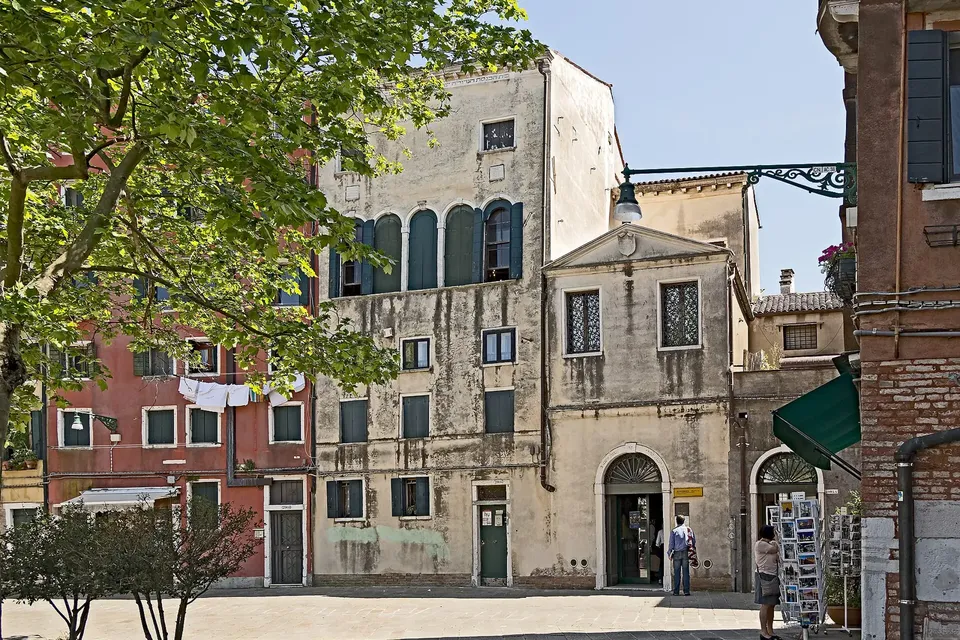
Hidden behind ordinary facades: the German, Canton, Italian, Levantine and Spanish scole.
 Books & Haggadah
The 2016 New Venice Haggadah exhibition
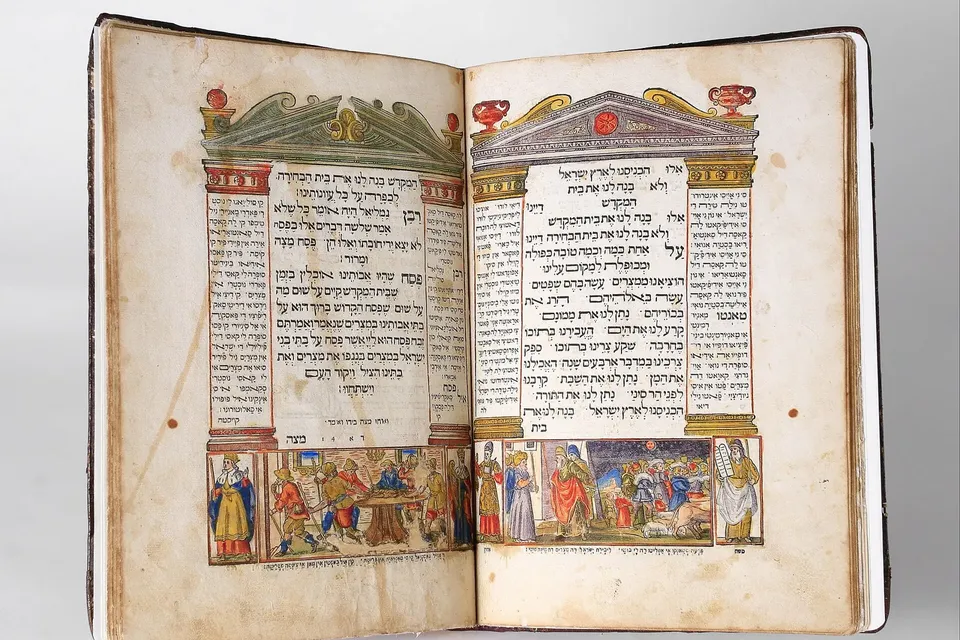
Twenty-four etchings on the walls of the Jewish Museum in the Ghetto's anniversary year, and the woodcuts of 1609 that inspired them.
 Ghetto history
The Shoah in Venice
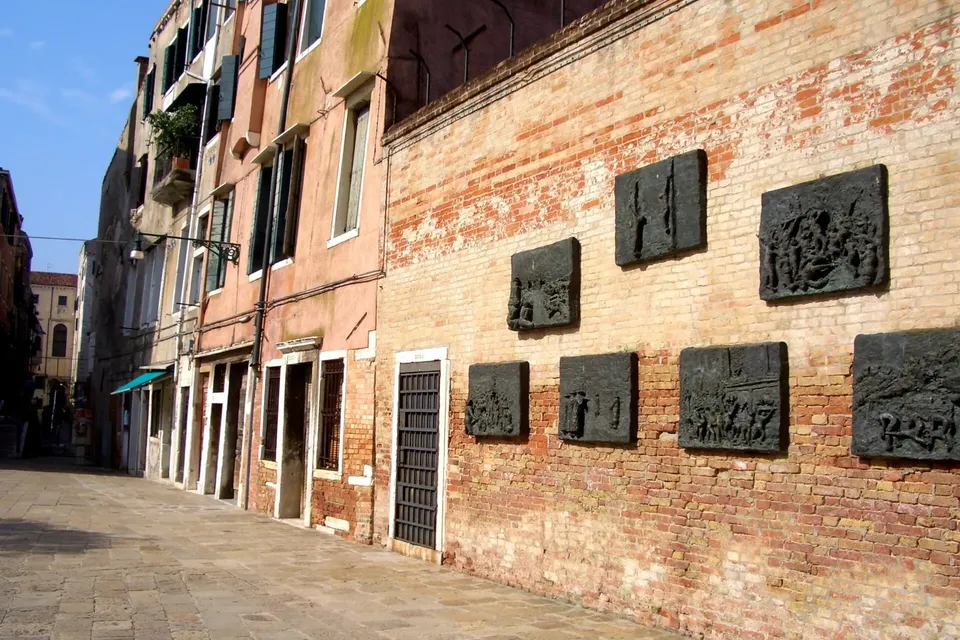
The racial laws, Giuseppe Jona's refusal, the arrests of 5 December 1943 and the memorials of Campo del Ghetto Nuovo.