The Shoah in Venice: racial laws, deportations and memory
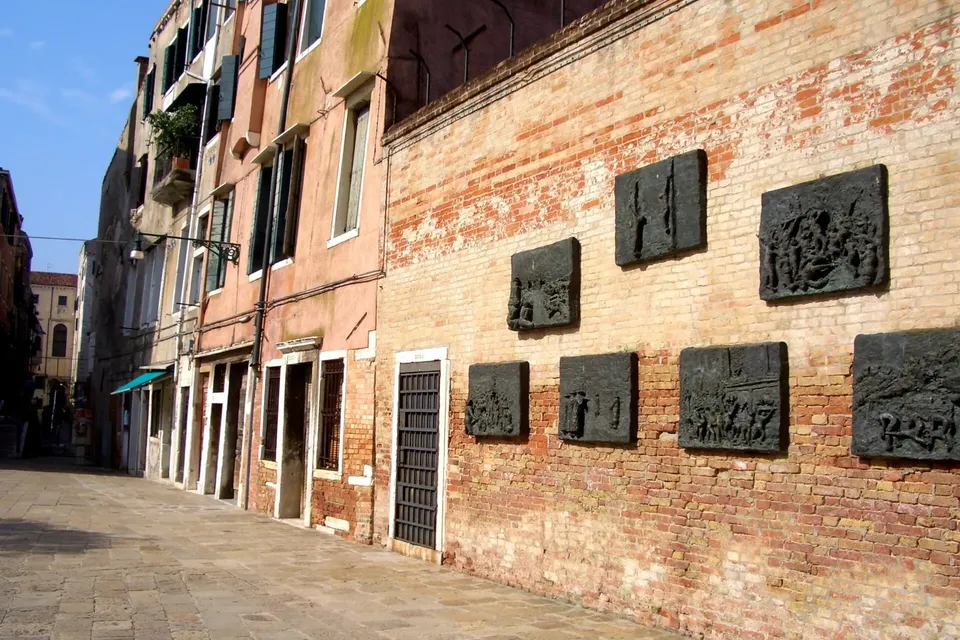
On the brick walls of Campo del Ghetto Nuovo, bronze reliefs and wooden plaques list the names of the Jews of Venice who were deported between 1943 and 1944. Most of them were murdered at Auschwitz. This article sets out what happened, from the anti-Jewish laws of 1938 to the round-ups of the German occupation, and how Venice keeps their memory.
Key facts
- 1938: the Fascist racial laws exclude Jews from schools, public employment and much of economic life.
- September 1943: after the armistice, German forces occupy northern Italy; the community's president, Giuseppe Jona, takes his own life rather than hand over a list of its members.
- 5 December 1943: about 150 Jews are arrested in Venice in a single night.
- 1944: further arrests, including the elderly of the Jewish rest home and patients of the hospital, among them Chief Rabbi Adolfo Ottolenghi.
- Toll: commonly cited totals range from 205 to 246 deportees; only eight returned from the camps.
The racial laws of 1938
In the autumn of 1938 Mussolini's government issued a series of decrees modelled in part on Nazi legislation. Jews were expelled from state schools and universities, as pupils and as teachers; dismissed from public administration, the army and the Fascist party; barred from many professions; limited in the property they could own; and forbidden to marry non-Jews. Foreign Jews were ordered to leave the country.
In Venice, a community of well-established families, many of them patriotic veterans of the First World War, saw doctors, lawyers, teachers and civil servants lose their positions overnight. Children could no longer attend their usual schools; the community organised its own (see Jewish childhood in Venice). Some families emigrated while it was still possible; others converted, hoping to escape the laws; most stayed.
Giuseppe Jona's refusal
In 1940 the community asked Giuseppe Jona, a respected physician who had practised for more than forty years at the Civil Hospital and was known as "the doctor of the poor", to become its president. He had himself been struck off by the academies and the register of physicians under the racial laws. He organised schooling for the children and defended the community against attacks in the press.
After the armistice of 8 September 1943, German troops occupied Venice. When the occupiers demanded an up-to-date list of the Jews remaining in the city, Jona wrote his will, leaving much of his estate to charitable works, and took his own life in mid-September rather than give them the names. A plaque in Campo del Ghetto Nuovo and a pavilion of the Civil Hospital bear his name, and in January 2020 a stumbling stone was laid for him in Cannaregio.
The round-ups
On 30 November 1943 the police of Mussolini's new Italian Social Republic ordered the arrest of all Jews in its territory and the confiscation of their property. In Venice the order was carried out in the night of 5 December 1943, when about 150 people were arrested at home. They were held in the city, then sent to transit camps on the mainland, from which they were deported to Auschwitz-Birkenau.
Arrests continued in 1944, carried out by Italian and German police. In the summer and autumn, the residents of the Jewish rest home in the Ghetto and patients in the city's hospitals, people too old or ill to have hidden, were taken. Among them was the chief rabbi, Adolfo Ottolenghi, who had chosen to stay with the most vulnerable members of his community. He was deported and killed.
Historians give different totals depending on the period counted and whether they include those who died in prison or transit camps: 205 Venetian Jews is the figure most often cited for November 1943 to August 1944, while one study counts 246. Only eight returned. Many others survived by hiding in the city or the countryside, sometimes helped by non-Jewish neighbours, or by escaping to Switzerland or to the parts of Italy already liberated by the Allies.
Rescuers and the limits of rescue
Not every Jew in Venice was caught. Some found shelter with friends, priests or former employees; others obtained false papers or crossed into Switzerland. These acts of help were real, and Yad Vashem has honoured many Italians, including people from the Veneto, as Righteous Among the Nations. But the high proportion of elderly and sick people among the victims shows the limits of rescue: those who could not move, or who trusted that age would protect them, were the easiest to find. The lists in Campo del Ghetto Nuovo include people in their eighties and nineties, taken from the community's rest home.
After the war
The community that emerged in 1945 was much reduced, by deportation, flight and emigration. Under its postwar leadership it rebuilt its institutions, reopened its synagogues and, in the early 1950s, founded the Jewish Museum to preserve its heritage. Survivors and families of the deported began to collect names and testimonies.
How Venice remembers
- Arbit Blatas's memorial. In 1980 the Lithuanian-born artist Arbit Blatas created a series of bronze reliefs depicting the deportation, set into the wall of Campo del Ghetto Nuovo. Nearby, wooden panels with barbed wire list the names and ages of those deported. Another work by Blatas, the sculpture known as "The Last Train", is part of the same memorial area.
- Stumbling stones. Since the 2010s, small brass plaques (pietre d'inciampo) have been set into the pavement in front of the homes of deported Venetians. Ca' Foscari University's "Remembering the City" project, with the Jewish community and the Veneto Region, documents each stone and the life behind it.
- 27 January. Italy's Day of Remembrance, established by law in 2000, is marked each year in the Ghetto and in schools across the city with readings of names, lectures and visits.
Sources
- Wikipedia, "History of the Jews in Venice" (Jona, 5 December 1943, 1944 arrests, totals, survivors).
- Ca' Foscari University of Venice, Remembering the City, "Giuseppe Jona (1866–1943)".
- Wikipedia, "Italian racial laws".
- Wikimedia Commons, Arbit Blatas, Holocaust monument, bronze reliefs, 1980.
- Liliana Picciotto, Il libro della memoria. Gli ebrei deportati dall'Italia (1943–1945), Mursia, 1991 (new edition 2002).

 Ghetto history
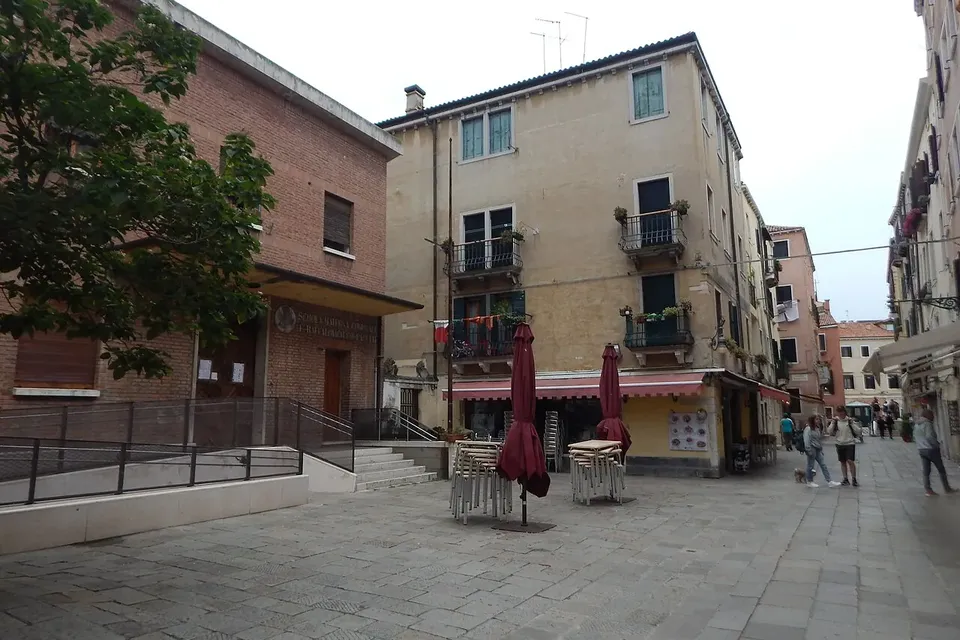
Jewish childhoods in Venice
Talmud Torah and Purim in the Ghetto, the community school of 1938, and the oral histories that keep these childhoods alive.
 Ghetto history
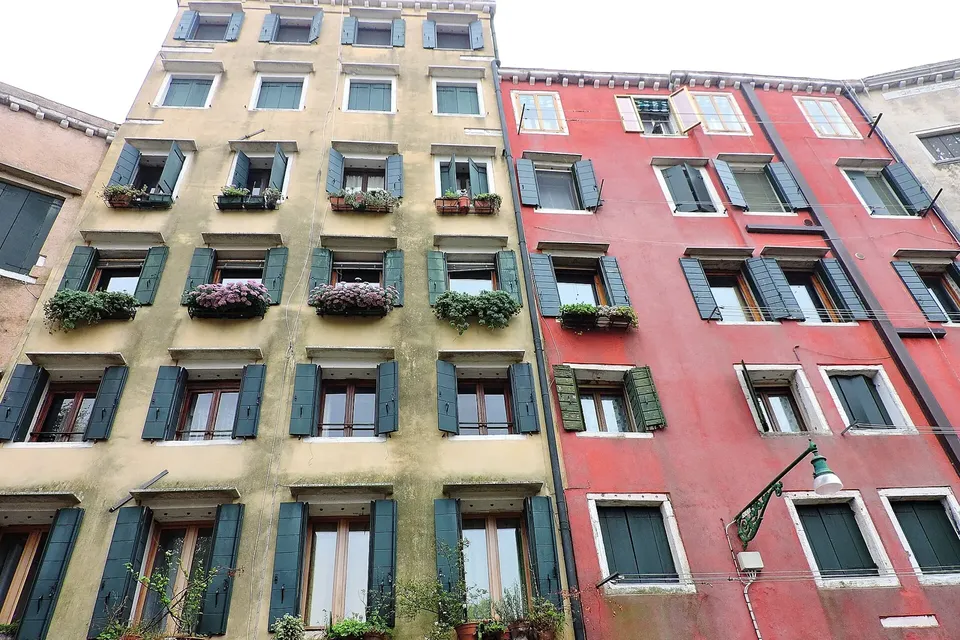
The Ghetto, 1516–1797
From the Senate decree of 29 March 1516 to the opening of the gates in July 1797.
 Places & institutions
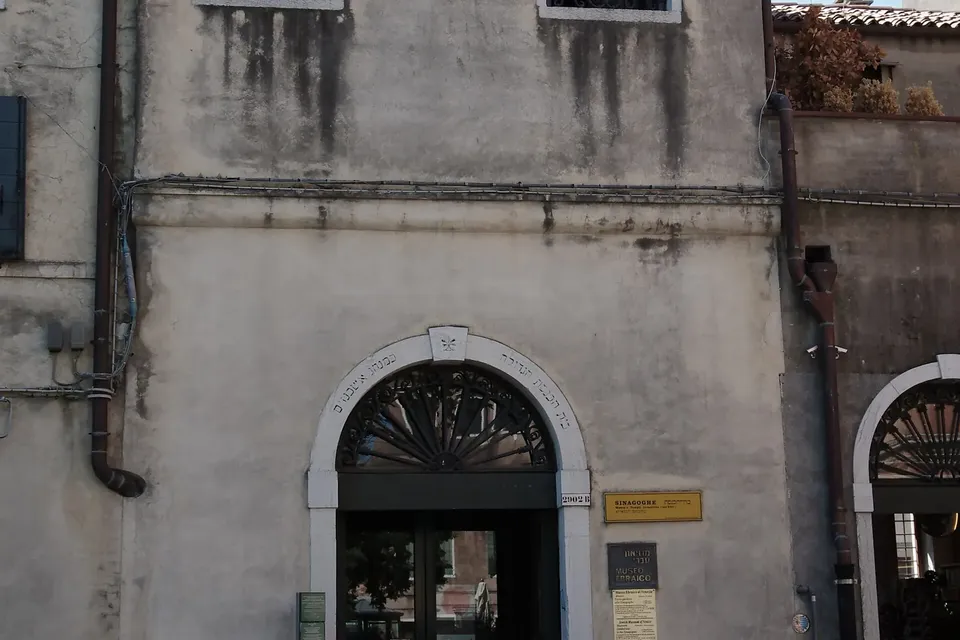
The Jewish Museum of Venice
Founded by the community after the war, closed for seven years, reopened in October 2026 with a route through all five synagogues.