Jewish childhoods in Venice: schooling, festivals and memory
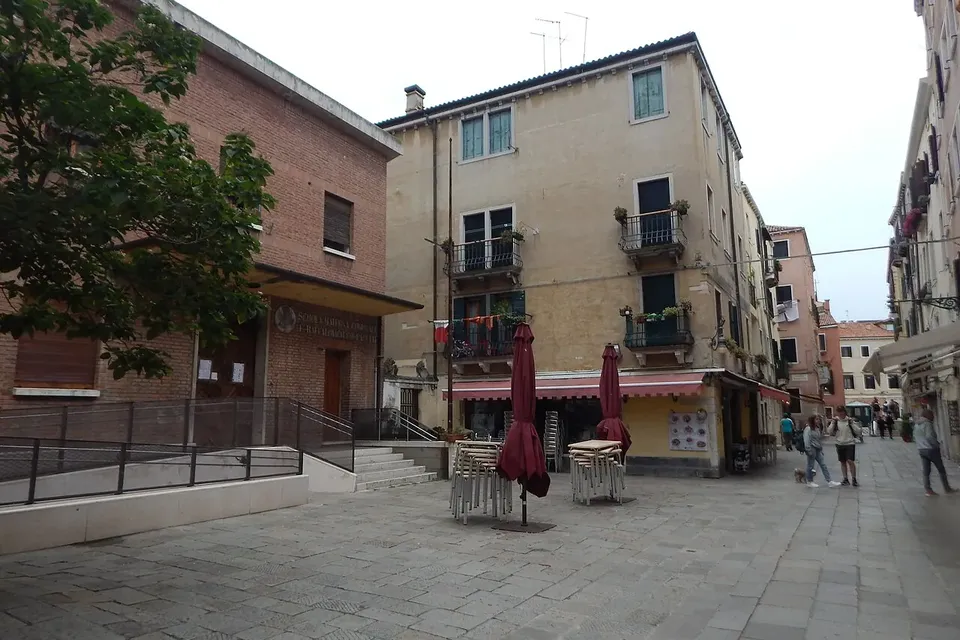
Histories of the Ghetto usually speak of merchants, rabbis and printers. Yet the Ghetto was also full of children, and the way Jewish children were taught, celebrated and later excluded tells much about the community. This article follows Jewish childhood in Venice over five centuries, using published research and the oral histories collected in the city.
Learning in the Ghetto
In the early modern Ghetto, education began at home and continued in small study groups. Boys learned to read Hebrew from about the age of five, often with a private tutor or melamed paid by the family, before moving on to the Bible with Rashi's commentary and, for the most able, to the Talmud. Each "nation" of the Ghetto supported charitable confraternities, and some of them, often known as Talmud Torah societies, paid for the teaching of children whose parents could not afford it.
Teaching was also a living for scholars. The rabbi Leon Modena, born in Venice in 1571, describes in his autobiography how for years he earned money as a tutor of boys, alongside his work as a preacher, cantor and corrector of books. Girls were generally taught at home; many learned to read the prayer book and to manage a household, and some families gave their daughters a more extensive education in Hebrew and Italian, as the case of the poet Sara Copio Sullam shows.
Hebrew printing helped. The Venetian presses produced primers, prayer books and books of Jewish law for laypeople in Italian or Judeo-Italian, so that families who could not afford a tutor still had texts to learn from.
Festivals made for children
Several Jewish festivals are built around children. At Passover, the Seder is structured so that the youngest asks the four questions and the parents answer by telling the story of the Exodus. The illustrated Haggadot printed in Venice from the sixteenth century, above all the famous edition of 1609, were designed to keep children awake and curious through the long evening (see the New Venice Haggadah). At Purim, children dressed up and noise was made at every mention of Haman, a custom that in Venice shared the season, and sometimes the masks, of the city's carnival. At Simchat Torah, children were called up to the reading of the Law and given sweets.
Coming of age was marked for boys at thirteen by the bar mitzvah, when a boy was called to read from the Torah for the first time in one of the Ghetto's synagogues. Italian Jewish communities also developed ceremonies for girls, but these became common only in modern times.
From the Ghetto to the public school
After the gates of the Ghetto were opened in 1797, and especially after Venice joined the Kingdom of Italy in 1866, Jewish children entered the city's public schools. Many Jewish families embraced Italian culture enthusiastically; their children attended the city's secondary schools, such as the Liceo Foscarini, and went on to university, while receiving their religious instruction in the afternoons or on Sundays at the community's school. By the early twentieth century, most Venetian Jewish children grew up as Italians among other Italians, with Jewish holidays and Hebrew lessons as part of a dual identity.
1938: the empty desk
That integration was broken by the racial laws of 1938. Among the first measures, Jewish pupils were barred from state schools at every level, and Jewish teachers were dismissed. Children who had sat beside their classmates in June found themselves excluded when school resumed in the autumn. The memory of this sudden exclusion, of the "empty desk", recurs in almost every testimony from that generation.
The communities were allowed to organise separate schools. In Venice, the community, led from 1940 by the physician Giuseppe Jona, set up its own classes with Jewish teachers who had themselves been dismissed from public schools. Local research suggests that about a hundred children were enrolled in the first year. For many pupils, these improvised classes were a refuge, taught by unusually qualified teachers and creating friendships that lasted a lifetime. The book Il banco vuoto. Scuola e leggi razziali. Venezia 1938–1945, published by Cierre, reconstructs this history in detail, and in 2012 a book-catalogue titled Ritorno a scuola traced the education of Venetian Jewish children between the racial laws and the postwar years.
After September 1943 the schools closed. Children went into hiding with their families or fled with them; some were deported with their parents, and the lists of those murdered include children (see the Shoah in Venice).
Postwar childhoods
The children who returned to Venice after 1945 grew up in a much smaller community. They returned to state schools and to Hebrew lessons, summer camps and youth movements, some of them Zionist, which prepared a number of young people for emigration to Israel. For many, the Ghetto became a place of afternoons and holidays rather than of daily life, as families had moved to other districts of the city or to the mainland.
Collecting memories
Because so much of this history lived only in family stories, Venetian institutions have made efforts to record it. Between 2009 and 2011, for example, a cycle of public conversations on Jewish childhoods, promoted with the Venetian section of the Jewish women's association ADEI-WIZO, invited members of the community from different backgrounds and generations to tell their childhood stories, and the meetings were filmed for archival use. Projects like Ca' Foscari University's "Remembering the City", which documents the stumbling stones laid in Venice, also reconstruct the lives of children deported in 1943–1944.
Such testimonies are invaluable but need care: memory compresses time, merges events and reflects what was learned later. Historians use them alongside school records, community archives and the press, which together give a fuller picture of how Jewish children lived, learned and were excluded.
Sources
- Ca' Foscari University of Venice, Remembering the City, "Giuseppe Jona (1866–1943)" (organisation of schooling for children after 1938).
- Wikipedia, "Italian racial laws" (exclusion from schools).
- Università di Milano-Bicocca, "Razza e istruzione" research project on the racial laws in Italian schools.
- Mark R. Cohen (ed. and trans.), The Autobiography of a Seventeenth-Century Venetian Rabbi: Leon Modena's Life of Judah, Princeton University Press, 1988.
- Il banco vuoto. Scuola e leggi razziali. Venezia 1938–1945, Cierre edizioni.
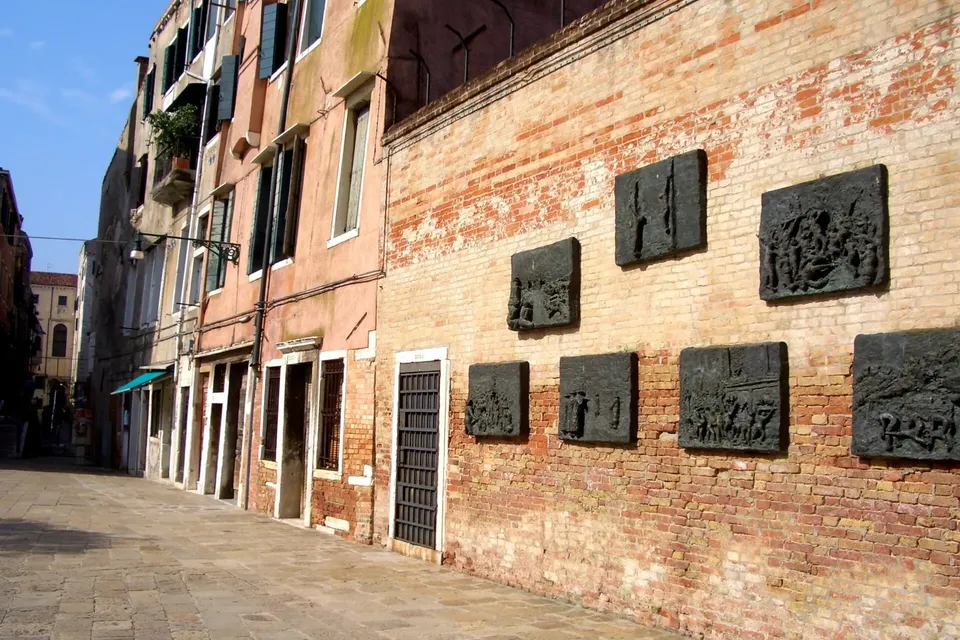 Ghetto history
The Shoah in Venice
The racial laws, Giuseppe Jona's refusal, the arrests of 5 December 1943 and the memorials of Campo del Ghetto Nuovo.
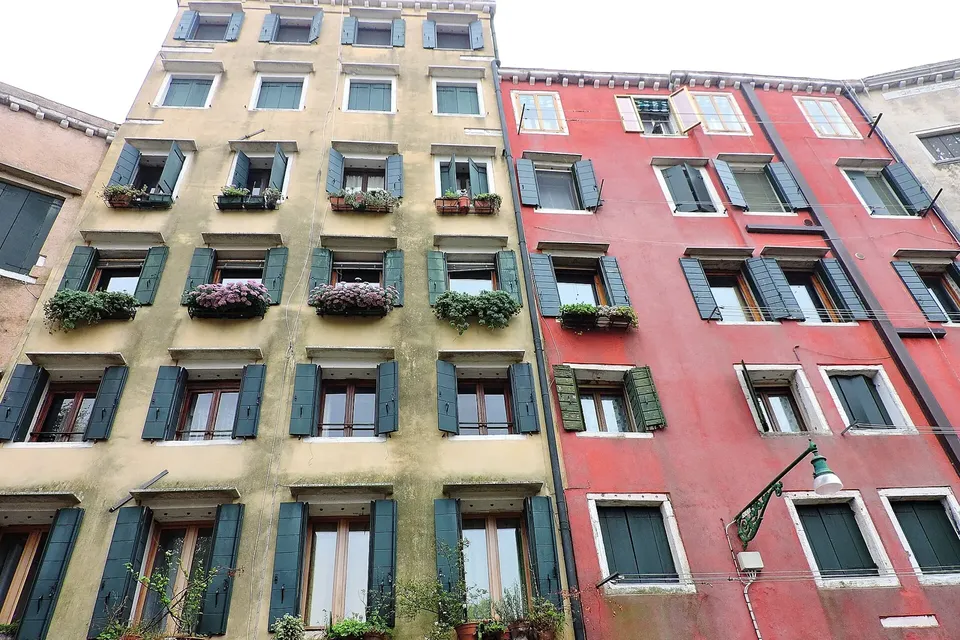 Ghetto history
The Ghetto, 1516–1797
From the Senate decree of 29 March 1516 to the opening of the gates in July 1797.
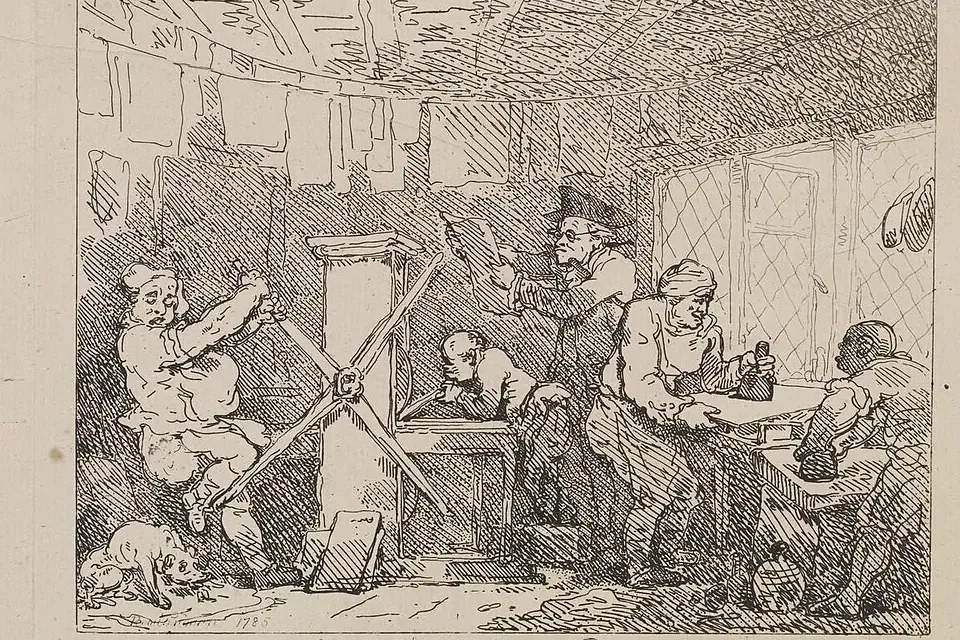 Books & Haggadah
The New Venice Haggadah project
Eight printmakers, a three-week residency and a famous Haggadah of 1609: the story of a Ghetto-anniversary book.