Stumbling stones in Venice: a searchable list of the 210 pietre d'inciampo
Since January 2014, small brass plaques have been set into the pavements of Venice in front of the last homes of people deported by the Nazis. This page lists all 210 of them recorded on the extraction date, from the Ghetto to the Lido and the mainland, with the words engraved on each stone, its address and the year it was laid.
The stones, called Stolpersteine in German and pietre d'inciampo in Italian, are a project begun by the German artist Gunter Demnig in the 1990s. In Venice they are promoted by the City, the Jewish Community, the Venetian institute for the history of the Resistance (Iveser) and the German Centre for Venetian Studies, and a new group is laid each January around the Day of Remembrance. Most commemorate Venetian Jews arrested in 1943 and 1944; others remember political deportees and soldiers captured after the armistice of 8 September 1943 and sent to camps in Germany and Poland. Our article on the Shoah in Venice tells that history.
- 210stones listed
- 188in the six sestieri
- 10on the Lido and San Servolo
- 12on the mainland (Mestre…)
- 159name Auschwitz
- 89people arrested on 5.12.1943
The stones
Stones are grouped by sestiere or locality, then by address. Inscriptions are reproduced as transcribed in the source, in Italian, with line breaks shown as slashes; spellings on the stones are kept. Where a coordinate is available, the map link opens OpenStreetMap.
Giorgio Ottolenghi
QUI ABITAVA / GIORGIO / OTTOLENGHI / NATO 1869 / ARRESTATO 6.12.1943 / DEPORTATO / AUSCHWITZ
Achille Aboaf
QUI ABITAVA / ACHILLE ABOAF / NATO 1891 / ARRESTATO 20.8.1944 / DEPORTATO / AUSCHWITZ / ASSASSINATO 30.4.1945
Gino Aboaf
QUI ABITAVA / GINO ABOAF / NATO 1925 / ARRESTATO 18.8.1944 / DEPORTATO / AUSCHWITZ / MAUTHAUSEN / LIBERATO
Ugo Beniamino Levi
QUI ABITAVA / UGO BENIAMINO LEVI / NATO 1897 / ARRESTATO 5.12.1943 / DEPORTATO / AUSCHWITZ / MORTO / IN DATA IGNOTA
Bruna Grassini
QUI ABITAVA / BRUNA GRASSINI / NATA 1904 / ARRESTATA 5.12.1943 / DEPORTATA / AUSCHWITZ / MORTA / IN DATA IGNOTA
Augusto Levi Minzi
QUI ABITAVA / AUGUSTO LEVI MINZI / NATO 1869 / ARRESTATO 17.8.1944 / DEPORTATO / AUSCHWITZ / ASSASSINATO 7.9.1944
Gisella Campos
QUI ABITAVA / GISELLA CAMPOS / NATA 1873 / ARRESTATA 9.9.1944 / DEPORTATA / AUSCHWITZ / ASSASSINATA
Edoardo Usigli
QUI ABITAVA / EDOARDO USIGLI / NATO 1876 / ARRESTATO 5.12.1943 / DEPORTATO / AUSCHWITZ / ASSASSINATO 26.2.1944
Anna Jarach Cesana
QUI ABITAVA / ANNA JARACH / CESANA / NATA 1881 / ARRESTATA 6.10.1944 / DEPORTATA / AUSCHWITZ / UCCISA ALL'ARRIVO
Moisè Calimani
QUI ABITAVA / MOISÈ CALIMANI / NATO 1870 / ARRESTATO 17.8.1944 / DEPORTATO / AUSCHWITZ / ASSASSINATO 7.9.1944
Riccardo Brandes
QUI ABITAVA / RICCARDO BRANDES / NATO 1917 / ARRESTATO 27.7.1944 / DEPORTATO / AUSCHWITZ / ASSASSINATO
Angelo Levi
QUI ABITAVA / ANGELO LEVI / NATO 1931 / ARRESTATO 5.12.1943 / DEPORTATO / AUSCHWITZ / ASSASSINATO 26.2.1944
Leonella Levi
QUI ABITAVA / LEONELLA LEVI / NATA 1934 / ARRESTATA 5.12.1943 / DEPORTATA / AUSCHWITZ / ASSASSINATA 26.2.1944
Lina Levi
QUI ABITAVA / LINA LEVI / NATA 1937 / ARRESTATA 5.12.1943 / DEPORTATA / AUSCHWITZ / ASSASSINATA 26.2.1944
Mario Levi
QUI ABITAVA / MARIO LEVI / NATO 1940 / ARRESTATO 5.12.1943 / DEPORTATO / AUSCHWITZ / ASSASSINATO 26.2.1944
Silvana Alda Levi
QUI ABITAVA / SILVANA ALDA LEVI / NATA 1928 / ARRESTATA 5.12.1943 / DEPORTATA / AUSCHWITZ / ASSASSINATA 7.2.1945 / BERGEN-BELSEN
Vittorina Levi
QUI ABITAVA / VITTORINA LEVI / NATA 1926 / ARRESTATA 5.12.1943 / DEPORTATA / AUSCHWITZ / ASSASSINATA
Alba Clerle
QUI ABITAVA / ALBA CLERLE / NATA 1879 / ARRESTATA 5.12.1943 / DEPORTATA / AUSCHWITZ / ASSASSINATA 26.2.1944
Cesira Clerle
QUI ABITAVA / CESIRA CLERLE / NATA 1876 / ARRESTATA 5.12.1943 / DEPORTATA / AUSCHWITZ / ASSASSINATA 26.2.1944
Attilio Grassini
QUI ABITAVA / ATTILIO GRASSINI / NATO 1879 / ARRESTATO 5.12.1943 / DEPORTATO / AUSCHWITZ / ASSASSINATO 26.2.1944
Salomone Aboaf
QUI ABITAVA / SALOMONE ABOAF / NATO 1868 / ARRESTATO 17.8.1944 / DEPORTATO / AUSCHWITZ / ASSASSINATO 7.9.1944
Annina Foà Melli
QUI ABITAVA / ANNINA FOÀ MELLI / NATA 1863 / ARRESTATA 17.8.1944 / DEPORTATA / AUSCHWITZ / ASSASSINATA 7.9.1944
Elsa Romanelli
QUI ABITAVA / ELSA ROMANELLI / NATA 1889 / ARRESTATA 5.12.1943 / DEPORTATA / AUSCHWITZ / ASSASSINATA
Raffaella Romanelli
QUI ABITAVA / RAFFAELLA / ROMANELLI / NATA 1897 / ARRESTATA 5.12.1943 / DEPORTATA / AUSCHWITZ / ASSASSINATA
Giuditta Aboaf
QUI ABITAVA / GIUDITTA ABOAF / NATA 1894 / ARRESTATA 5.5.1944 / DEPORTATA / AUSCHWITZ / ASSASSINATA
Achille Navarro
QUI ABITAVA / ACHILLE NAVARRO / NATO 1921 / ARRESTATO 5.5.1944 / DEPORTATO / AUSCHWITZ / ASSASSINATO
Amalia Navarro
QUI ABITAVA / AMALIA NAVARRO / NATA 1917 / ARRESTATA 5.5.1944 / DEPORTATA / AUSCHWITZ / THERESIENSTADT / LIBERATA
Lina Navarro
QUI ABITAVA / LINA NAVARRO / NATA 1926 / ARRESTATA 5.5.1944 / DEPORTATA / AUSCHWITZ / THERESIENSTADT / LIBERATA
Regina Aboaf
QUI ABITAVA / REGINA ABOAF / NATA 1888 / ARRESTATA 5.5.1944 / DEPORTATA / AUSCHWITZ / ASSASSINATA
Aldo Levi
QUI ABITAVA / ALDO LEVI / NATO 1900 / ARRESTATO 5.12.1943 / DEPORTATO / AUSCHWITZ / ASSASSINATO
Rosita Corinaldi
QUI ABITAVA / ROSITA CORINALDI / NATA 1901 / ARRESTATA 14.12.1943 / DEPORTATA / AUSCHWITZ / ASSASSINATA 26.2.1944
Anna Dina
QUI ABITAVA / ANNA DINA / NATA 1936 / ARRESTATA 5.12.1943 / DEPORTATA / AUSCHWITZ / ASSASSINATA 26.2.1944
Giorgia Dina
QUI ABITAVA / GIORGIA DINA / NATA 1933 / ARRESTATA 5.12.1943 / DEPORTATA / AUSCHWITZ / ASSASSINATA 26.2.1944
Guido Dina
QUI ABITAVA / GUIDO DINA / NATO 1929 / ARRESTATO 5.12.1943 / DEPORTATO / AUSCHWITZ / ASSASSINATO
Leone Dina
QUI ABITAVA / LEONE DINA / NATO 1942 / ARRESTATO 5.12.1943 / DEPORTATO / AUSCHWITZ / ASSASSINATO 26.2.1944
Mario Dina
QUI ABITAVA / MARIO DINA / NATO 1894 / ARRESTATO 5.12.1943 / DEPORTATO / AUSCHWITZ / ASSASSINATO
Elena Fano Corinaldi
QUI ABITAVA / ELENA FANO / CORINALDI / NATA 1868 / ARRESTATA 5.6.1944 / DEPORTATA / AUSCHWITZ / ASSASSINATA 6.8.1944
Anna Bassani
QUI ABITAVA / ANNA BASSANI / NATA 1875 / ARRESTATA 5.12.1943 / DEPORTATA / AUSCHWITZ / ASSASSINATA 26.2.1944
Eugenio Saraval
QUI ABITAVA / EUGENIO SARAVAL / NATO 1898 / ARRESTATO 30.10.1944 / DEPORTATO / RAVENSBRÜCK / ASSASSINATO
Casa Israelitica di riposo
17 AGOSTO 1944 / DA QUESTA CASA / FURONO DEPORTATI / 21 ANZIANI OSPITI / ASSASSINATI NEI / LAGER NAZISTI
Edoardo Bassani
QUI ABITAVA / EDOARDO BASSANI / NATO 1876 / ARRESTATO 5.12.1943 / DEPORTATO / AUSCHWITZ / ASSASSINATO 26.2.1944
Ida Ancona
QUI ABITAVA / IDA ANCONA / NATA 1871 / ARRESTATA 17.8.1944 / DEPORTATA / AUSCHWITZ / ASSASSINATA 7.9.1944
Ada Ancona
QUI ABITAVA / ADA ANCONA / NATA 1873 / ARRESTATA 5.12.1943 / DEPORTATA / AUSCHWITZ / ASSASSINATA 26.2.1944
Giuseppe Modena
QUI ABITAVA / GIUSEPPE MODENA / NATO 1898 / ARRESTATO COME POLITICO / 18.1.1944 / DEPORTATO / MAUTHAUSEN / ASSASSINATO 13.1.1945
Bartolomeo Meloni
QUI ABITAVA / BARTOLOMEO / MELONI / NATO 1900 / ARRESTATO COME POLITICO / 4.10.1943 / DEPORTATO / DACHAU / MORTO 9.7.1944
Adelaide Scaramella Messulam
QUI ABITAVA / ADELAIDE SCARAMELLA MESSULAM / NATA 1906 / ARRESTATA 5.12.1943 / DEPORTATA / AUSCHWITZ / ASSASSINATA
Rosetta Scaramella Messulam
QUI ABITAVA / ROSETTA SCARAMELLA MESSULAM / NATA 1938 / ARRESTATA 5.12.1943 / DEPORTATA / AUSCHWITZ / ASSASSINATA 10.04.1944
Anna Scaramella Messulam
QUI ABITAVA / ANNA SCARAMELLA MESSULAM / NATA 1935 / DEPORTATA / AUSCHWITZ / ASSASSINATA 10.04.1944
Lidia Lopes
QUI ABITAVA / LIDIA LOPES PEGNA / NATA 1919 / ARRESTATA 5.12.1943 / DEPORTATA / AUSCHWITZ / ASSASSINATA
Luciano Mariani
QUI ABITAVA / LUCIANO MARIANI / NATO 1913 / ARRESTATO 5.12.1943 / DEPORTATO / AUSCHWITZ / LIBERATO
Ida Calimani Navarro
QUI ABITAVA / IDA CALIMANI / NAVARRO / NATA 1886 / ARRESTATA 11.10.1944 / DEPORTATA / AUSCHWITZ / ASSASSINATA
Bruno Basso
QUI ABITAVA / BRUN BASSO / NATO 1923 / ARRESTATO 18.8.1944 / DEPORTATO / AUSCHWITZ / MORT0 31.1.1945
Susanna Calimani Nacamulli
QUI ABITAVA / SUSANNA / CALIMANI NACAMULLI / NATA 1883 / ARRESTATA 5.12.1943 / DEPORTATA / AUSCHWITZ / ASSASSINATA 26.2.1944
Elena Nacamulli
QUI ABITAVA / ELENA NACAMULLI / NATA 1916 / ARRESTATA 5.12.1943 / DEPORTATA / AUSCHWITZ / ASSASSINATA
Mara Nacamulli
QUI ABITAVA / MARA NACAMULLI / NATA 1941 / ARRESTATA 5.12.1943 / DEPORTATA / AUSCHWITZ / ASSASSINATA
Eugenia Franco Pitteri
QUI ABITAVA / EUGENIA / FRANCO PITTERI / NATA 1882 / ARRESTATA 5.12.1943 / DEPORTATA / AUSCHWITZ / ASSASSINATA 26.2.1944
Vittorio Nacamulli
QUI ABITAVA / VITTORIO NACAMULLI / NATO 1908 / ARRESTATO 5.5.1944 / DEPORTATO / AUSCHWITZ / ASSASSINATO 31.8.1944
Costanza Misano
QUI ABITAVA / COSTANZA MISANO / NATA 1906 / ARRESTATA 5.5.1944 / DEPORTATA / AUSCHWITZ / ASSASSINATA
Gina Nacamulli
QUI ABITAVA / GINA NACAMULLI / NATA 1935 / ARRESTATA 5.5.1944 / DEPORTATA / AUSCHWITZ / ASSASSINATA 30.6.1944
Umberto Nacamulli
QUI ABITAVA / UMBERTO NACAMULLI / NATO 1944 / ARRESTATO 5.5.1944 / DEPORTATO / AUSCHWITZ / ASSASSINATO 30.6.1944
Anna Jarach
QUI ABITAVA / ANNA JARACH / NATA 1874 / ARRESTATA 8.10.1944 / DETENUTA / RISIERA DI SAN SABBA / ASSASSINATA
Leo Mariani
QUI ABITAVA / LEO MARIANI / NATO 1943 / ARRESTATO 18.12.1943 / DEPORTATO / AUSCHWITZ / ASSASSINATO 26.2.1944
Pia Cesana Mariani
QUI ABITAVA / PIA CESANA / MARIANI / NATA 1922 / ARRESTATA 5.12.1943 / DEPORTATA / AUSCHWITZ / ASSASSINATA
Marco Jarach
QUI ABITAVA / MARCO JARACH / NATO 1877 / ARRESTATO 5.12.1943 / DEPORTATO / AUSCHWITZ / ASSASSINATO 26.2.1944
Regina Allegrina Navarro
QUI ABITAVA / REGINA ALLEGRINA NAVARRO / NATA 1885 / ARRESTATA 5.12.1943 / DEPORTATA / AUSCHWITZ / ASSASSINATA
Paola Sonino
QUI ABITAVA / PAOLA SONINO / NATA 1915 / ARRESTATA 29.1.1944 / DEPORTATA / AUSCHWITZ / ASSASSINATA
Bellina Melli
QUI ABITAVA / BELLINA MELLI / NATA 1887 / ARRESTATA 5.12.1943 / DEPORTATA / AUSCHWITZ / ASSASSINATA 26.2.1944
Raffaele Grassini
QUI ABITAVA / RAFFAELE GRASSINI / NATO 1906 / ARRESTATO 5.12.1943 / DEPORTATO / AUSCHWITZ / MORTO 24.2.1945
Angelo Grassini
QUI ABITAVA / ANGELO GRASSINI / NATO 1933 / ARRESTATO 5.12.1943 / DEPORTATO / AUSCHWITZ / ASSASSINATO 26.2.1944
'Mirna Grassini
QUI ABITAVA / MIRNA GRASSINI / NATA 1938 / ARRESTATA 5.12.1943 / DEPORTATA / AUSCHWITZ / ASSASSINATA 26.2.1944
Lina Nacamulli
QUI ABITAVA / LINA NACAMULLI / NATA 1910 / ARRESTATA 5.12.1943 / DEPORTATA / AUSCHWITZ / ASSASSINATA
Bendetta Dina Polacco
QUI ABITAVA / BENEDETTA DINA POLACCO / NATA 1869 / ARRESTATA 4.9.1944 / DEPORTATA / AUSCHWITZ / ASSASSINATA
Regina Abolaffio
QUI ABITAVA / REGINA ABOLAFFIO / NATA 1870 / ARRESTATA 17.8.1944 / DEPORTATA / AUSCHWITZ / ASSASSINATA 7.9.1944
Rosa De Leon
QUI ABITAVA / ROSA DE LEON / NATA 1878 / ARRESTATA 5.12.1943 / DEPORTATA / AUSCHWITZ / ASSASSINATA 26.2.1944
Anna Forti
QUI ABITAVA / ANNA FORTI / NATA 1865 / ARRESTATA 17.8.1944 / DEPORTATA / AUSCHWITZ / ASSASSINATA 7.9.1944
Anselmo Giuseppe Forti
QUI ABITAVA / ANSELMO GIUSEPPE FORTI / NATO 1863 / ARRESTATO 17.8.1944 / DEPORTATO / AUSCHWITZ / ASSASSINATO 7.9.1944
Giuditta Forti
QUI ABITAVA / GIUDITTA FORTI / NATA 1870 / ARRESTATA 17.8.1944 / DEPORTATA / AUSCHWITZ / ASSASSINATA 7.9.1944
Regina Finzi
QUI ABITAVA / REGINA FINZI / NATA 1861 / ARRESTATA 17.8.1944 / DEPORTATA / AUSCHWITZ / ASSASSINATA 7.9.1944
Davide De Leon
QUI ABITAVA / DAVIDE DE LEON / NATO 1876 / ARRESTATO 5.12.1943 / DEPORTATO / AUSCHWITZ / ASSASSINATO 26.2.1944
Angelo Limentani
QUI ABITAVA / ANGELO LIMENTANI / NATO 1888 / ARRESTATO 5.12.1943 / DEPORTATO / AUSCHWITZ / ASSASSINATO
Eugenia Loewenthal
QUI ABITAVA / EUGENIA LOEWENTHAL / NATA 1880 / ARRESTATA 5.12.1943 / DEPORTATA / AUSCHWITZ / ASSASSINATA 26.2.1944
Carlotta Cantoni
QUI ABITAVA / CARLOTTA CANTONI / NATA 1883 / ARRESTATA 5.12.1943 / DEPORTATA / AUSCHWITZ / ASSASSINATA 26.2.1944
Elvira Pardo
QUI ABITAVA / ELVIRA PARDO / NATA 1883 / ARRESTATA 5.12.1943 / DEPORTATA / AUSCHWITZ / ASSASSINATA 26.2.1944
Emma Saravalle
QUI ABITAVA / EMMA SARAVALLE / NATA 1865 / ARRESTATA 31.10.1943 / DEPORTATA / RAVENSBRÜCK / ASSASSINATA
Giuseppe Jona
QUI ABITAVA / GIUSEPPE JONA / NATO 1866 / CERCÒ RIFUGIO / NELLA MORTE / 17.9.1943
Gilmo Perlmutter
QUI ABITAVA / GILMO PERLMUTTER / NATO 1899 / ARRESTATO 13.12.1943 / DEPORTATO / AUSCHWITZ / ASSASSINATO
Ida Aboaf
QUI ABITAVA / IDA ABOAF / NATA 1901 / ARRESTATA 5.12.1943 / DEPORTATA / AUSCHWITZ / ASSASSINATA
Bruno Perlmutter
QUI ABITAVA / BRUNO PERLMUTTER / NATO 1935 / ARRESTATO 5.12.1943 / DEPORTATO / AUSCHWITZ / ASSASSINATO / 26.2.1944
Achille Perlmutter
QUI ABITAVA / ACHILLE PERLMUTTER / NATO 1924 / ARRESTATO 5.12.1943 / DEPORTATO / AUSCHWITZ / ASSASSINATO / 26.2.1944
Oscar Carli
QUI ABITAVA / OSCAR CARLI / NATO 1919 / CATTURATO 9.9.1943 / DEPORTATO / NEUENGAMME / ASSASSINATO 29.1.1944
Giacomo Polacco
QUI ABITAVA / GIACOMO POLACCO / NATO 1883 / ARRESTATO 5.12.1943 / DEPORTATO / AUSCHWITZ / ASSASSINATO 26.2.1944
Mosè Polacco
QUI ABITAVA / MOSÈ POLACCO / NATO 1921 / ARRESTATO 3.12.1943 / DEPORTATO / AUSCHWITZ / ASSASSINATO 31.3.1944
Regina Polacco
QUI ABITAVA / REGINA POLACCO / NATA 1910 / ARRESTATA 3.12.1943 / DEPORTATA / AUSCHWITZ / ASSASSINATA 30.9.1944
Anna Jona
QUI ABITAVA / ANNA JONA / NATA 1855 / ARRESTATA 5.12.1943 / DEPORTATA / AUSCHWITZ / ASSASSINATA / 26.2.1944
Angiolina Vivante
QUI ABITAVA / ANGIOLINA VIVANTE / NATA 1878 / ARRESTATA 5.12.1943 / DEPORTATA / AUSCHWITZ / ASSASSINATA / 26.2.1944
Renzo Sorato
QUI ABITAVA / RENZO SORATO / NATO 1920 / CATTURATO 9.9.1943 / DEPORTATO / PRZEMYSL / ASSASSINATO 25.4.1945DURANTE IL TRASPORTO / CECOSLOVACCHIA
Giuseppe Muggia
QUI ABITAVA / GIUSEPPE MUGGIA / NATO 1877 / ARRESTATO 5.12.1943 / DEPORTATO / AUSCHWITZ / ASSASSINATO 26.2.1944
Franca Muggia
QUI ABITAVA / FRANCA MUGGIA / NATA 1909 / ARRESTATA 5.12.1943 / DEPORTATA / AUSCHWITZ / ASSASSINATA
Maria Ester Anna Levi Muggia
QUI ABITAVA / MARIA ESTER ANNA / LEVI MUGGIA / NATA 1884 / ARRESTATA 5.12.1943 / DEPORTATA / AUSCHWITZ / ASSASSINATA 26.2.1944
Elfriede Foerder
QUI ABITAVA / ELFRIEDE / FOERDER / NATA 1878 / ARRESTATA 26.1.1944 / DEPORTATA / AUSCHWITZ / ASSASSINATA 26.2.1944
Adele Almansi
QUI ABITAVA / ADELE ALMANSI / ARRESTATA 5.12.1943 / DEPORTATA / AUSCHWITZ / ASSASSINATA 26.2.1944
Carlo Levi
QUI ABITAVA / CARLO LEVI / NATO 1895 / ARRESTATO 11.10.1944 / DEPORTATO / ASSASSINATO
Alessandro Ottolenghi
QUI ABITAVA / ALESSANDRO OTTOLENGHI / NATO 1886 / ARRESTATO 27.1.1944 / DEPORTATO / AUSCHWITZ / ASSASSINATO 26.2.1944
Abramo Melli
QUI ABITAVA / ABRAMO MELLI / NATO 1902 / ARRESTATO 5.12.1943 / DEPORTATO / AUSCHWITZ / ASSASSINATO
Ada Melli
QUI ABITAVA / ADA MELLI / NATA 1899 / ARRESTATA 5.12.1943 / DEPORTATA / AUSCHWITZ / ASSASSINATA
Amalia Melli
QUI ABITAVA / AMALIA MELLI / NATA 1894 / ARRESTATA 5.12.1943 / DEPORTATA / AUSCHWITZ / ASSASSINATA
Enrichetta Melli
QUI ABITAVA / ENRICHETTA MELLI / NATA 1890 / ARRESTATA 5.12.1943 / DEPORTATA / AUSCHWITZ / ASSASSINATA
Clementina Fano
QUI ABITAVA / CLEMENTINA FANO / NATA 1890 / ARRESTATA 5.12.1943 / DEPORTATO / AUSCHWITZ / MORTA 28.2.1945
Eloisa Ravà
QUI ABITAVA / ELOIS RAVA' / NATA 1878 / ARRESTATA 5.12.1943 / DEPORTATA / AUSCHWITZ / ASSASSINATA 26.2.1944
Samuele Leone Foà
QUI ABITAVA / SAMUELE LEONE FOA' / NATO 1888 / ARRESTATO 5.12.1943 / DEPORTATO / AUSCHWITZ / ASSASSINATO
Marco Rietti
QUI ABITAVA / MARCO RIETTI / NATO 1880 / ARRESTATO 11.11.1943 / DEPORTATO / AUSCHWITZ / ASSASSINATO 26.2.1944
Marco Todesco
QUI ABITAVA / MARCO TODESCO / NATO 1891 / ARRESTATO 6.12.1943 / DEPORTATO / AUSCHWITZ / MORTO / IN DATA IGNOTA
Alberto Leone Todesco
QUI ABITAVA / ALBERTO LEONE / TODESCO / NATO 1930 / ARRESTATO 6.12.1943 / DEPORTATO / AUSCHWITZ / MORTO / IN DATA IGNOTA
Adele Dina
QUI ABITAVA / ADELE DINA / NATA 1890 / ARRESTATA 6.12.1943 / DEPORTATA / AUSCHWITZ / MORTA / IN DATA IGNOTA
Elena Mariani
QUI ABITAVA / ELENA MARIANI / NATA 1920 / ARRESTATA 5.12.1943 / DEPORTATA / AUSCHWITZ / ASSASSINATA 26.2.1944
Ada Elena Mariani
QUI ABITAVA / ADA ELENA MARIANI / NATA 1927 / ARRESTATA 5.12.1943 / DEPORTATA / AUSCHWITZ / ASSASSINATA 26.2.1944
Enrico Mariani
QUI ABITAVA / ENRICO MARIANI / NATO 1912 / ARRESTATO 5.12.1943 / DEPORTATO / AUSCHWITZ / ASSASSINATO 18.1.1945
Francesco Isacco Mariani
QUI ABITAVA / FRANCESCO ISACCO / MARIANI / NATO 1888 / ARRESTATO 5.12.1943 / DEPORTATO / AUSCHWITZ / ASSASSINATO 26.2.1944
Adolfo Ottolenghi
QUI ABITAVA / ADOLFO / OTTOLENGHI / NATO 1885 / ARRESTATO 17.8.1944 / DEPORTATO / AUSCHWITZ / MORTO IN DATA IGNOTA
Gustavo Corinaldi
QUI ABITAVA / GUSTAVO CORINALDI / NATO 1881 / ARRESTATO 5.12.1943 / DEPORTATO / AUSCHWITZ / ASSASSINATO 26.2.1944
Bonaventura Ferrazzutto
QUI ABITAVA / BONAVENTURA / FERRAZZUTTO / NATO 1887 / ARRESTATO COME POLITICO / 26.11.1943 / DEPORTATO / MAUTHAUSEN / ASSASSINATO 4.10.1944 / CASTELLO DI HARTHEIM
Aldo Salom
QUI ABITAVA / ALDO SALOM / NATO 1906 / ARRESTATO 8.5.1944 / DEPORTATO / AUSCHWITZ / MORTO 7.5.1945
Rita Calimani
QUI ABITAVA / RITA CALIMANI / NATA 1892 / ARRESTATA 5.12.1943 / DEPORTATA / AUSCHWITZ / ASSASSINATA
Wally Nacamulli
QUI ABITAVA / WALLY NACAMULLI / NATA 1914 / ARRESTATA 5.12.1943 / DEPORTATA / AUSCHWITZ / ASSASSINATA
Girolamo Segré
QUI ABITAVA / GIROLAMO SEGRÉ / NATO 1914 / ARRESTATO 5.12.1943 / DEPORTATO / AUSCHWITZ / ASSASSINATO 26.2.1944
Nedda Segré
QUI ABITAVA / NEDDA SEGRÉ / NATA 1933 / ARRESTATA 5.12.1943 / DEPORTATA / AUSCHWITZ / ASSASSINATA 26.2.1944
Fanny Finzi
QUI ABITAVA / FANNY FINZI / NATA 1868 / ARRESTATA 13.6.1944 / DEPORTATA / AUSCHWITZ / ASSASSINATA / 6.8.1944
Emma Vitta
QUI ABITAVA / EMMA VITTA / NATO 1887 / ARRESTATA 5.12.1943 / DEPORTATA / AUSCHWITZ / ASSASSINATA
Marco Ettore Vitta
QUI ABITAVA / MARCO ETTORE / VITTA / NATO 1884 / ARRESTATO 5.12.1943 / DEPORTATO / AUSCHWITZ / ASSASSINATO 6.8.1944
Carlo Vitta
QUI ABITAVA / CARLO VITTA / NATO 1891 / ARRESTATO 5.12.1943 / DEPORTATO / AUSCHWITZ / ASSASSINATO 22.1.1945 / DACHAU
Ettore Marella
QUI ABITAVA / ETTORE MARELLA / NATO 1892 / ARRESTATO COME POLITICO / 13.9.1944 / DEPORTATO / MAUTHAUSEN / ASSASSINATO 10.4.1945
Emma Geltrude Calimani
QUI ABITAVA / EMMA GELTRUDE / CALIMANI / NATA 1875 / ARRESTATA 5.12.1943 / DEPORTATA / AUSCHWITZ / ASSASSINATA 26.2.1944
Eloisa Scandiani
QUI ABITAVA / ELOISA SCANDIANI / NATA 1863 / ARRESTATA 31.10.1944 / DEPORTATA / RAVENSBRÜCK / ASSASSINATA 31.12.1944
Arrigo Bernau
QUI ABITAVA / ARRIGO BERNAU / NATO 1886 / ARRESTATO 31.12.1943 / DEPORTATO / AUSCHWITZ / ASSASSINATO
Eugenio Todesco
QUI ABITAVA / EUGENIO TODESCO / NATO 1897 / ARRESTATO 30.10.1943 / DEPORTATO / AUSCHWITZ / ASSASSINATO 23.2.1945 / BUCHENWALD
Bruno Todesco
QUI ABITAVA / BRUNO TODESCO / NATO 1933 / ARRESTATO 5.12.1943 / DEPORTATO / AUSCHWITZ / ASSASSINATO 22.2.1944
Ida Dina Todesco
QUI ABITAVA / IDA DINA TODESCO / NATA 1897 / DEPORTATA 5.12.1943 / AUSCHWITZ / ASSASSINATA
Emilio Todesco
QUI ABITAVA / EMILIO TODESCO / NATO 1928 / ARRESTATO 8.2.1944 / DEPORTATO / AUSCHWITZ / ASSASSINATO 14.3.1945 / BUCHENWALD
Mario Todesco
QUI ABITAVA / MARIO TODESCO / NATO 1926 / ARRESTATO 8.2.1944 / DEPORTATO / AUSCHWITZ / ASSASSINATO 5.3.1945 / BUCHENWALD
Sergio Todesco
QUI ABITAVA / SERGIO TODESCO / NATO 1938 / ARRESTATO 5.12.1943 / DEPORTATO / AUSCHWITZ / ASSASSINATO 26.2.1944
Giulio Fano
QUI ABITAVA / GIULIO FANO / NATO 1874 / ARRESTATO 5.6.1944 / DEPORTATO / AUSCHWITZ / ASSASSINATO 6.8.1944
Giuseppe Fano
QUI ABITAVA / GIUSEPPE FANO / NATO 1870 / ARRESTATO 5.6.1944 / DEPORTATO / AUSCHWITZ / ASSASSINATO 6.8.1944
Bellina Lina Augusta Colorni
QUI ABITAVA / BELLINA LINAAUGUSTA COLORNI / NATA 1892 / ARRESTATA 5.12.1943 / DEPORTATA / AUSCHWITZ / ASSASSINATA 26.2.1944
Vittorio Coen Porto
QUI ABITAVA / VITTORIO / COEN PORTO / NATO 1866 / ARRESTATO 2.2.1944 / DEPORTATO / AUSCHWITZ / ASSASSINATO 10.4.1944
Amelia Coen Porto Levi
QUI ABITAVA / AMELIA / COEN PORTO LEVI / NATA 1873 / ARRESTATA 5.12.1943 / DEPORTATA / AUSCHWITZ / ASSASSINATA 26.2.1944
Alessandro Navarro
QUI ABITAVA / ALESSANDRO / NAVARRO / NATO 1869 / ARRESTATO 8.6.1944 / DEPORTATO / AUSCHWITZ / ASSASSINATO 6.8.1944
Fernanda Ascoli
QUI ABITAVA / FERNANDA ASCOLI / NATA 1883 / ARRESTATO 6.10.1944 / DEPORTATA / ASSASSINATA
Vittorio Navarra
Inscription not transcribed in the source.
Vittoria Tedeschi
QUI ABITAVA / VITTORIA TEDESCHI / NATA 1870 / ARRESTATA 6.12.1943 / DEPORTATA / RAVENSBRÜCK / ASSASSINATA
Riccardo Marsiglio
QUI ABITAVA / RICCARDO MARSIGLIO / NATO 1866 / ARRESTATO 9.6.1944 / DEPORTATO / AUSCHWITZ / ASSASSINATO
Raffaele Leghziel
QUI ABITAVA / RAFFAELE LEGHZIEL / NATO 1910 / ARRESTATO 7.8.1944 / DEPORTATO / AUSCHWITZ / ASSASSINATO
Emilio Scarpa
QUI ABITAVA / EMILIO SCARPA / NATA 1895 / ARRESTATO COME POLITICO / 13.9.1944 / DEPORTATO / MAUTHAUSEN / MORTO 15.9.1945
Giuseppe Todesco
QUI ABITAVA / GIUSEPPE TODESCO / NATO 1879 / ARRESTATO 11.10.1944 / DEPORTATO / ASSASSINATO
Giuseppe Boralevi
QUI ABITAVA / GIUSEPPE BORALEVI / NATO 1880 / ARRESTATO 11.10.1944 / DEPORTATO / ASSASSINATO
Alba Vivante
QUI ABITAVA / ALBA VIVANTE / NATA 1872 / ARRESTATA 7.8.1944 / DEPORTATA / AUSCHWITZ / ASSASSINATA
Anna Vivante
QUI ABITAVA / ANNA VIVANTE / NATA 1866 / ARRESTATA 7.8.1944 / DEPORTATA / AUSCHWITZ / ASSASSINATA
Costante Vivante
QUI ABITAVA / COSTANTE VIVANTE / NATO 1878 / ARRESTATO 7.8.1944 / DEPORTATO / AUSCHWITZ / ASSASSINATO
Ida Vivante
QUI ABITAVA / IDA VIVANTE / NATA 1870 / ARRESTATA 7.8.1944 / DEPORTATA / AUSCHWITZ / ASSASSINATA
Gianna Cavalieri Vivante
QUI ABITAVA / GIANNA CAVALIERI VIVANTE / NATA 1888 / ARRESTATA 15.2.1944 / DEPORTATA / RAVENSBRÜCK / ASSASSINATA
Rita Ancona
QUI ABITAVA / RITA ANCONA / NATA 1926 / ARRESTATA 3.10.1944 / DEPORTATA / RAVENBRÜCKLIBERATA / RETZOW-RECHLIN
Regina Brandes
QUI ABITAVA / REGINA BRANDES / NATA 1909 / ARRESTATA 13.10.1944 / DEPORTATA / RAVENSBRÜCK / LIBERATA
Augusto Coen Porto
QUI ABITAVA / AUGUSTO / COEN PORTO / NATO 1869 / ARRESTATO 5.12.1943 / DEPORTATO / AUSCHWITZ / ASSASSINATO 6.2.1944
Rosalia Luzzatto
QUI ABITAVA / ROSALIA LUZZATTO / NATA 1871 / ARRESTATA 30.12.1943 / DEPORTATA / AUSCHWITZ / ASSASSINATA 26.2.1944
Bruno Bassani
QUI ABITAVA / BRUNO BASSANI / NATO 1912 / ARRESTATO 5.12.1943 / DEPORTATO / AUSCHWITZ / ASSASSINATO / BUCHENWALD
Clementina Polacco
QUI ABITAVA / CLEMENTINA GIUSEPPINA POLACCO / NATA 1875 / ARRESTATA 5.12.1943 / DEPORTATA / AUSCHWITZ / ASSASSINATA 26.2.1944
Loris Cimarosti
QUI ABITAVA / LORIS CIMAROSTI / NATO 1923 / CATTURATO 9.9.1943 / DEPORTATO TORUN / ASSASSINATO 23.9.1944 / GÖRLITZ
Jole Jesurum
QUI ABITAVA / JOLE JESURUM / NATA 1926 / ARRESTATA 7.11.1944 / DEPORTATA / RAVENSBRÜCK / ASSASSINATA 1.5.1945
Marisa Jesurum
QUI ABITAVA / MARISA JESURUM / NATA 1929 / ARRESTATA 7.11.1944 / DEPORTATA / RAVENSBRÜCK / DECEDUTA 22.8.1945 / BERGEN-BELSEN
Arrigo Jesurum
QUI ABITAVA / ARRIGO JESURUM / NATO 1886 / ARRESTATO 4.11.1944 / DEPORTATO / RAVENSBRÜK / ASSASSINATO
Adele Coen
QUI ABITAVA / ADELE COEN / NATa 1881 / ARRESTATA 5.12.1943 / DEPORTATA / AUSCHWITZ / ASSASSINATA 26.2.1944
Alice Coen
QUI ABITAVA / ALICE COEN / NATa 1873 / ARRESTATA 5.12.1943 / DEPORTATA / AUSCHWITZ / ASSASSINATA 26.2.1944
Ospedale SS. Giovanni e Paolo
NEL 1944 / DA QUESTO / OSPEDALE / FURONO DEPORTATI / 15 PAZIENTI EBREI / ASSASSINATI NEI / LAGER NAZISTI
Elia Gino Musatti
QUI ABITAVA / ELIA GINOMUSATTI / NATO 1877 / ARRESTATO 6.10.1944 / DEPORTATO / RAVENBRÜCK / ASSASSINATO
Romano Brussato
QUI ABITAVA / ROMANO BRUSSATO / NATO 1914 / ARRESTATO COME MILITARE / 9.9.1943 / DEPORTATO / FALLINGBOSTEL / ASSASSINATO 7.11.1944 / BERGEN-BELSEN
Enrica Polacco
QUI ABITAVA / ENRICA POLACCO / NATA 1913 / ARRESTATA 3.12.1943 / DEPORTATA / AUSCHWITZ / LIBERATA / THERESIENSTAD
Gildo Barbon
QUI ABITAVA / GILDO BARBON / NATO 1910 / ARRESTATO COME POLITICO / DEPORTATO / MAUTHAUSEN / MORTO 12.5.1945
Carlo Caselli
QUI ABITAVA / CARLO CASELLI / NATO 1908 / ARRESTATO COME POLITICO / 2.10.1944 / DEPORTATO / MAUTHAUSEN / ASSASSINATO 4.3.1945
Giovanni Gervasoni
QUI ABITAVA / GIOVANNI GERVASONI / NATO 1909 / ARRESTATO COME POLITICO / 3.1.1944 / DEPORTATO / DACHAU / ASSASSINATO 17.2.1945
Pietro Andreatta
QUI ABITAVA / PIETRO ANDREATTA / NATO 1913 / CATTURATO 11.9.1943 / DEPORTATO / MARIENBURG / MORTO 14.7.1945 / DACHAU
Cesare Salomone Luzzatto
QUI ABITAVA / CESARE SALOMONE LUZZATTO / NATO 1870 / ARRESTATO 7.8.1944 / DEPORTATO / AUSCHWITZ / ASSASSINATO
Elisa Popper
QUI ABITAVA / ELISA POPPER / NATA 1893 / ARRESTATA 7.8.1944 / DEPORTATA / AUSCHWITZ / ASSASSINATA
Adolfo Nunes Vais
QUI ABITAVA / ADOLFO NUNES VAIS / NATO 1925 / ARRESTATO 17.3.1944 / DEPORTATO / AUSCHWITZ / MORTO 15.3.1945 / GROSS-ROSEN
Salvatore Vivante
QUI ABITAVA / SALVATORE VIVANTE / NATO 1921 / ARRESTATO 17.1.1944 / DEPORTATO / AUSCHWITZ / ASSASSINATO
Olga Blumenthal
QUI INSEGNAVA / OLGA BLUMENTHAL / NATA 1873 / ARRESTATA 30.10.1944 / DEPORTATA / RAVENSBRÜCK / ASSASSINATA 24.2.1945
Gaetano Franzoso
QUI ABITAVA / GAETANO FRANZOSO / NATO 1915 / CATTURATO 11.9.1943 / DEPORTATO FULLEN / ASSASSINATO 2.1.1944 / DORTMUND
Mario Turcati
QUI ABITAVA / MARIO TURCATI / NATO 1913 / CATTURATO 11.9.1943 / DEPORTATO FULLEN / ASSASSINATO 2.1.1944
Gilda Jesurum Foà
QUI ABITAVA / GILDA JESURUM / FOA' / NATA 1884 / ARRESTATA 3.2.1944 / DEPORTATA / AUSCHWITZ / ASSASSINATA 26.2.1944
Edoardo Cipulat
QUI ABITAVA / EDOARDO CIPULAT / NATO 1925 / ARRESTATO COME POLITICO / 7.4.1944 / DEPORTATO / DACHAU / ASSASSINATO 28.3.1945
Ospedale psichiatrico San Servolo
11 OTTOBRE 1944 / DA QUESTO OSPEDALE / FURONO DEPORTATI / 6 PAZIENTI EBREI / ASSASSINATI NEI / LAGER NAZISTI
Ada Kuhn
QUI ABITAVA / ADA KUHN / NATA 1884 / ARRESTATA 5.12.1943 / DEPORTATA / AUSCHWITZ / ASSASSINATA 26.2.1944
Beatrice Kuhn
QUI ABITAVA / BEATRICE KUHN / NATA 1874 / ARRESTATA 5.12.1943 / DEPORTATA / AUSCHWITZ / ASSASSINATA 26.2.1944
Gino Vianello
QUI ABITAVA / GINO VIANELLO / NATO 1917 / ARRESTATO COME POLITICO / DEPORTATO / MAUTHAUSEN / ASSASSINATO 29.12.1944
Gina Giulia Mieli
QUI ABITAVA / GINA GIULIA MIELI / NATA 1895 / ARRESTATA 5.12.1943 / DETENUTA / RISIERA DI SAN SABBA / ASSASSINATA OTT. 1944
Ida Mieli
QUI ABITAVA / IDA MIELI / NATA 1882 / ARRESTATA 5.12.1943 / DETENUTA / RISIERA DI SAN SABBA / ASSASSINATA
Edgardo Bassani
QUI ABITAVA / EDGARDO BASSANI / NATO 1893 / ARRESTATO 1.12.1943 / DEPORTATO / AUSCHWITZ / ASSASSINATO
Franco Bassani
QUI ABITAVA / FRANCO BASSANI / NATO 1923 / ARRESTATO 1.12.1943 / DEPORTATO / AUSCHWITZ / ASSASSINATO
Tina Bassani
QUI ABITAVA / TINA BASSANI / NATA 1929 / ARRESTATA 1.12.1943 / DEPORTATA / AUSCHWITZ / ASSASSINATA
Nives Servadio
QUI ABITAVA / NIVES SERVADIO / NATA 1900 / ARRESTATA 1.12.1943 / DEPORTATA / AUSCHWITZ / ASSASSINATA
Angelo Colombo
QUI ABITAVA / ANGELO COLOMBO / NATO 1912 / ARRESTATO 31.3.1944 / DEPORTATO / AUSCHWITZ / ASSASSINATO 30.4.1944
Vittorio Bassi
QUI ABITAVA / VITTORIO BASSI / NATO 1901 / ARRESTATO 18.12.1943 / DEPORTATO / AUSCHWITZ / ASSASSINATO
Guglielmo Trabacchin
QUI ABITAVA / GUGLIELMOTRABACCHIN / NATO 1912 / CATTURATO 9.9.1943 / DEPORTATO / HOHEINSTEIN / ASSASSINATO 6.9.1944AMBURGO
Arciso Vivian
A FAVARO VENETOABITAVA / ARCISO VIVIAN / NATO 1922 / CATTURATO 9.9.1943 / DEPORTATO / STARGARD / ASSASSINATO 21.5.1944DORTMUND
Luigi Milani
QUI ABITAVA / LUIGI MILANI / NATO 1923 / CATTURATO 9.9.1943 / DEPORTATO / TREUENBRIETZEN / ASSASSINATO 23.4.1945
Giovanni Mognato
ALLA GAZZERAABITAVA / GIOVANNI MOGNATO / NATO 1909 / CATTURATO 8.9.1943 / DEPORTATO / BATHORN / ASSASSINATO 6.8.1944DORTMUND
Bruno Mario Casellato
QUI ABITAVA / BRUNO MARIO / CASELLATO / NATO 1922 / CATTURATO 12.9.1943 / DEPORTATO / STABLACK / ASSASSINATO 12.7.1944HAMMERSTEIN
Virginio Valt
QUI ABITAVA / VIRGINIO VALT / NATO 1913 / CATTURATO 9.9.1943 / DEPORTATO / DACHAU / ASSASSINATO 7.4.1944
Francesco Braun
A TRIVIGNANO ABITAVA / FRANCESCO / BRAUN / NATO 1906 / ARRESTATO 11.11.1944 / DEPORTATO / RAVENSBRÜCK / LIBERATO / PARCHIM
Ester Altberger
A TRIVIGNANO ABITAVA / ESTER / ALTBERGER / NATA 1909 / ARRESTATA 11.11.1944 / DEPORTATA / RAVENSBRÜCK / LIBERATA / BERGEN-BELSEN
Erminia Braun
A TRIVIGNANO ABITAVA / ERMINIA / BRAUN / NATA 1936 / ARRESTATA 11.11.1944 / DEPORTATA / RAVENSBRÜCK / LIBERATA / BERGEN-BELSEN
Roberto Braun
A TRIVIGNANO ABITAVA / ROBERTO / BRAUN / NATO 1937 / ARRESTATO 11.11.1944 / DEPORTATO / RAVENSBRÜCK / MORTO 22.6.1945 / BERGEN-BELSEN
Reading an inscription
Most stones follow the same formula: Qui abitava ("here lived"), the name, the year of birth (nato, nata), the date of arrest (arrestato) or capture (catturato, used for soldiers taken after 8 September 1943), deportation (deportato) and the camp, then the fate: assassinato (murdered) with a date where it is known, morto in data ignota (died on an unknown date), or liberato (liberated). Detenuto marks detention, for example in the Risiera di San Sabba in Trieste. Three collective stones remember the residents of the Jewish old people's home and the Jewish patients taken from two hospitals.
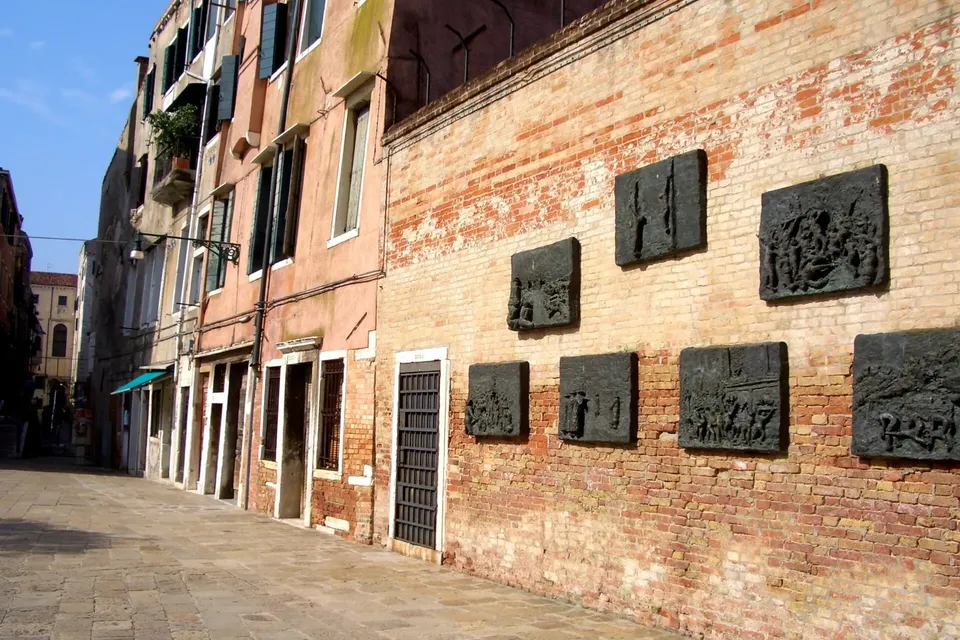
If you go: the stones lie flush with the pavement and are easy to miss. Many are in Cannaregio, around the Ghetto Nuovo and Ghetto Vecchio and along the Fondamenta di Cannaregio; our French-language guide to visiting the Ghetto describes the memorials in Campo del Ghetto Nuovo.
Method, sources and licence
Data. The list is extracted from the Italian Wikipedia article "Pietre d'inciampo a Venezia", revision 152939231 of 17 October 2026, read on 13 November 2026. That article compiles the inscriptions, addresses and dates of laying from the City of Venice's announcements and the site of the Venetian committee. 210 entries: 198 in the historic city, the Lido and San Servolo, and 12 on the mainland. One entry (Vittorio Navarra, San Marco 3870) has no transcribed inscription in the source.
Processing. We read the article's table with a script, cleaned the wiki markup and assigned each stone to a sestiere or locality from its address. The "camp" filter looks for the camp names engraved on the stone (Auschwitz, Ravensbrück, and so on); it does not cover places of death named only in a biography, and a stone may name more than one place. Coordinates are those given in the source for 88 stones; the others have none, so we draw no map. We did not alter or complete any inscription.
Other sources. The committee's site pietredinciampovenezia.it and the City's news (Pietre d'inciampo 2026) announce new stones; Gunter Demnig's project is described at stolpersteine.eu. For biographies, see Ca' Foscari's Remembering the City and Stefania Bertelli, Pietre d'inciampo. Cinque itinerari della memoria a Venezia (1943–1945), Nuovadimensione, 2024.
Licence. The source text is available under CC BY-SA 4.0; this list, derived from it, is shared under the same licence, with credit to the contributors of Italian Wikipedia. Filtering runs in your browser; nothing is sent anywhere. Our About page explains how we correct errors; new stones are added to the list when the source records them.