Hebrew printing in Venice, 1516–1610, in numbers: presses, dates, bans, and what the Italian census misses
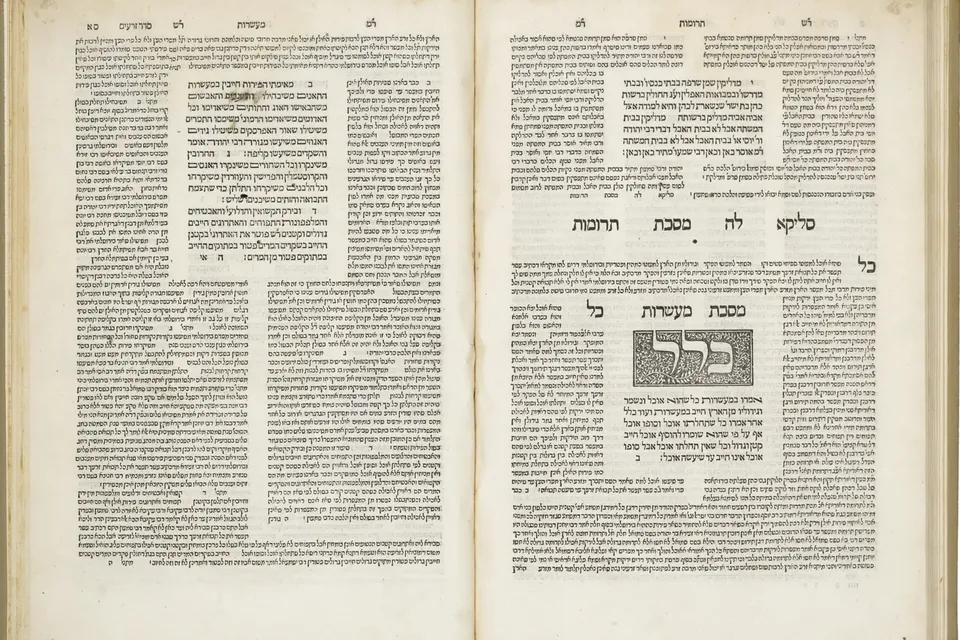
Venice is often called the capital of Hebrew printing in the sixteenth century. How long did that last, who ran the presses, and how much of their work does today's national census of Italian editions actually record? We put the dates and figures from the standard biographical sources side by side with a count from EDIT16, the Italian census of sixteenth-century books. The result is a short timeline, two charts and two files anyone can reuse.
Key figures
- 30 November 1516: date of the first Hebrew book printed in Venice, a Pentateuch issued by Daniel Bomberg.
- 15 folio volumes: Bomberg's complete Babylonian Talmud, printed from 1519 to 3 June 1523.
- 127 editions: the Bomberg output listed by the historian David Werner Amram in 1909.
- 1554–1563: nine years in which Hebrew printing stopped in Venice after the Council of Ten's ban.
- About 20,000 copies of 16 or 17 Hebrew titles seized in Venice in September 1568.
- 49: Venetian Hebrew editions recorded in EDIT16, out of 28,235 editions it lists for Venice and 68,724 for all of Italy.
Four presses in a century
Jews were generally not allowed to own printing presses in Venice. Hebrew books were therefore printed in workshops held by Christian entrepreneurs, with Jewish scholars, typesetters and proofreaders preparing the texts. Four names dominate the century, and the Dizionario Biografico degli Italiani, the national biographical dictionary published by Treccani, gives the dates of each.
Daniel Bomberg, a merchant's son from Antwerp, first appears in a Senate privilege of 23 April 1515. According to his entry in the Dizionario Biografico, the first Hebrew book from his press is dated 15 Tevet 5277, that is 30 November 1516. The first Rabbinic Bible followed in 1517–1518, then the complete Babylonian Talmud, begun in 1519 and finished on 3 June 1523 in fifteen folio volumes, and the first edition of the Jerusalem Talmud in the same year. Output was "very scarce" from 1531 to 1533 and stopped entirely from 1533 to 1537, then picked up again: five editions in 1544, ten in 1545. The last book appeared in 1549.
Marco Antonio Giustiniani, a Venetian patrician, opened a rival Hebrew press in 1545 and printed both Talmuds between 1546 and 1551. Alvise Bragadin, another patrician, launched his press in 1550 with Maimonides' Mishneh Torah annotated by Meir of Padua. The Bragadin entry tells how Giustiniani's pirated edition of the same book led to an appeal to Rabbi Moses Isserles in Kraków, and how the quarrel helped bring about the papal condemnation of the Talmud in 1553. The firm, as the "Stamperia Bragadina", stayed in the family until the middle of the eighteenth century.
Giovanni di Gara, who called himself "servus Bombergii a pueritia", a servant of Bomberg since boyhood, bought part of his types. His biography places all his work in Venice between 1564 and 1610, the last book appearing after his death in December 1609. His press printed the illustrated Haggadah of 1609, the subject of our article on the 2016 exhibition and the 1609 book.
Bans, seizures and rules
The figures that matter most in this history are not print runs but interruptions. Venice set up prior censorship of the press in 1545. After the papal condemnation of 1553, the Bragadin entry records an estimate of more than a hundred thousand volumes of Hebrew texts destroyed across Europe, and that on 21 October 1554 the Council of Ten banned the Talmud in Venice and extended the ban to all books in Hebrew. Printing only resumed in 1563, when Bragadin, Cristoforo Zanetti, Giovanni Grifio, Giorgio Cavalli and di Gara went back to work.
Control then tightened step by step. The di Gara entry lists the main measures: approval by three readers from 1562, registration of permits with the magistrates against blasphemy from 1566, deposit of the approved manuscript from 1569. In September 1568, 16 or 17 Hebrew titles printed since 1566, about 20,000 copies in all, were seized and the printers fined. On 18 December 1571, Jews were barred from working in printing shops; printers were later allowed to employ them as correctors and editors, which is how scholars such as Leon Modena came to work on Venetian editions.
What the national census counts
EDIT16, the national census of sixteenth-century Italian editions run by the Istituto Centrale per il Catalogo Unico (ICCU), describes editions printed in Italy between 1501 and 1600 "in any language". It is the obvious place to measure Venice's weight in the book trade, and it confirms it: of the 68,724 editions in the database on 22 November 2026, 28,235 were printed in Venice, or 41 per cent, more than three times as many as Rome.
For Hebrew, however, the census is a poor guide. It records 70 editions in Hebrew for the whole of Italy, 49 of them printed in Venice. That is fewer than half of the 127 editions listed for Bomberg's press alone, and leaves out most of the work of Giustiniani, Bragadin and di Gara. Most of Italy's Hebrew printing is documented elsewhere: in Hebrew bibliographies and in the catalogues of large Judaica collections. The Bomberg entry itself notes that when the librarian Ester Pastorello searched Italian public libraries she found only five of the 127 Bomberg editions, against 75 held by the British Museum. Anyone writing about Hebrew books printed in Venice should treat EDIT16's Hebrew count as a sample of what Italian libraries describe, not as an inventory.
What the books are worth today
The scarcity of these editions shows in the salerooms. On 22 December 2015, a copy of Bomberg's Babylonian Talmud, from the Valmadonna Trust Library, sold at Sotheby's New York for $9,322,000, against an estimate of $5–7 million. Fine Books & Collections reported it as "a new world auction record for any piece of Judaica". For the wider story of these books, from layout to censorship, see our article on the Jewish book in Venice and the printing section of the 1906 Jewish Encyclopedia article on Venice.
Download the data
Timeline of Hebrew printing in Venice (CSV): 23 dated events with the figure and source for each. · EDIT16 editions by city (CSV): the twelve largest printing centres and the database total.
Free to reuse with a link to this page.
Method and sources
Dates and figures for the presses come from three entries of the Dizionario Biografico degli Italiani: "Bomberg, Daniel" by Alfredo Cioni (vol. 11, 1969), "Bragadin, Alvise" by Alfredo Cioni (vol. 13, 1971) and "Giovanni di Gara" by Pier Cesare Ioly Zorattini (vol. 56, 2001), read on treccani.it on 22 November 2026. Where they differ on a detail (the date of the 1553 papal measure is given as 2 August in one entry and 12 September in another), we give only the year. EDIT16 counts are the facet counts returned by the public search of the database (place of printing; language) on 22 November 2026; they change as records are added. The bars of the timeline show the years given in the entries, not a count of editions per year, which these sources do not provide.
- Dizionario Biografico degli Italiani, Treccani: entries Bomberg, Bragadin, Giovanni di Gara.
- ICCU, EDIT16, Censimento nazionale delle edizioni italiane del XVI secolo.
- Fine Books & Collections, "Daniel Bomberg's 16th-Century Talmud Sells for $9.3 Million at Sotheby's NY", 23 December 2015.
- Jewish Encyclopedia (1906), "Venice".
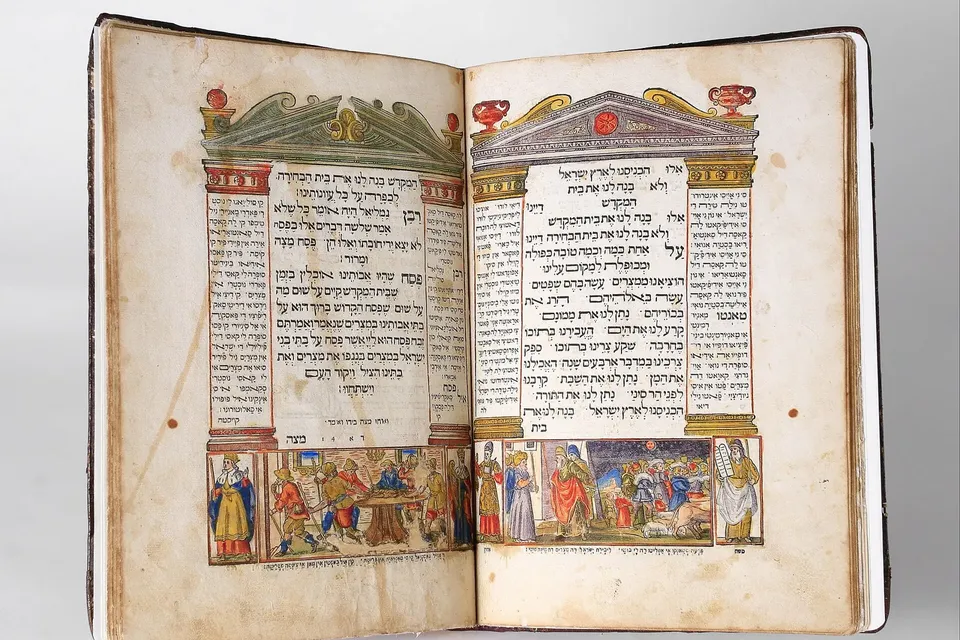
Books & HaggadahThe Jewish book: histories, media, metaphors
Bomberg's Talmud, the bonfire of 1553, the censors' pens and the idea of the book as a portable homeland.
 Books & Haggadah
The 2016 New Venice Haggadah exhibition
Twenty-four etchings on the walls of the Jewish Museum in the Ghetto's anniversary year, and the woodcuts of 1609 that inspired them.
 Lives & letters
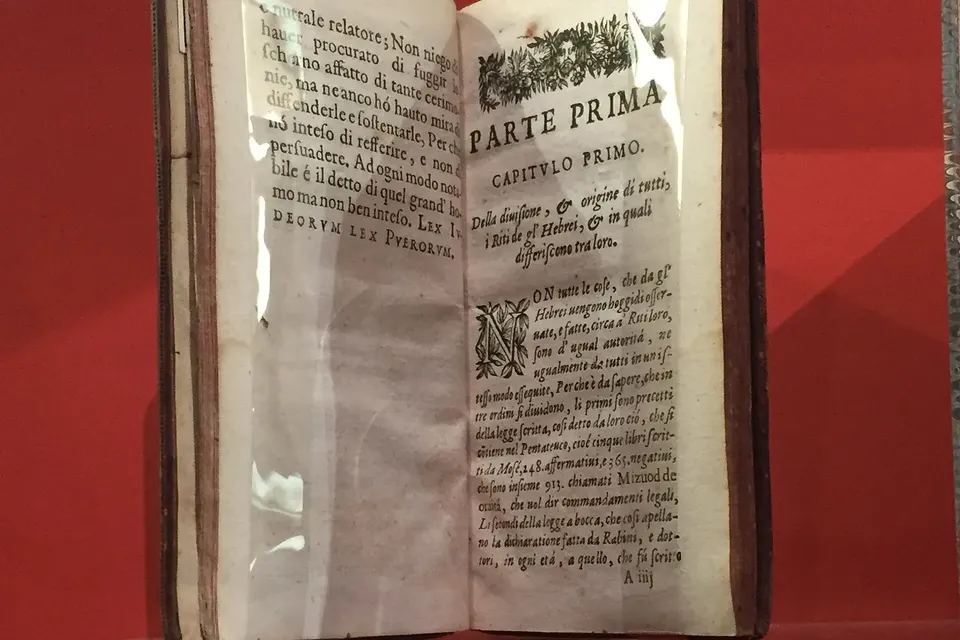
Leon Modena, rabbi of the Ghetto
Sermons that drew Christian audiences, a candid autobiography, and the Historia de' riti hebraici of 1637.