The old Jewish cemetery on the Lido: six centuries in stone
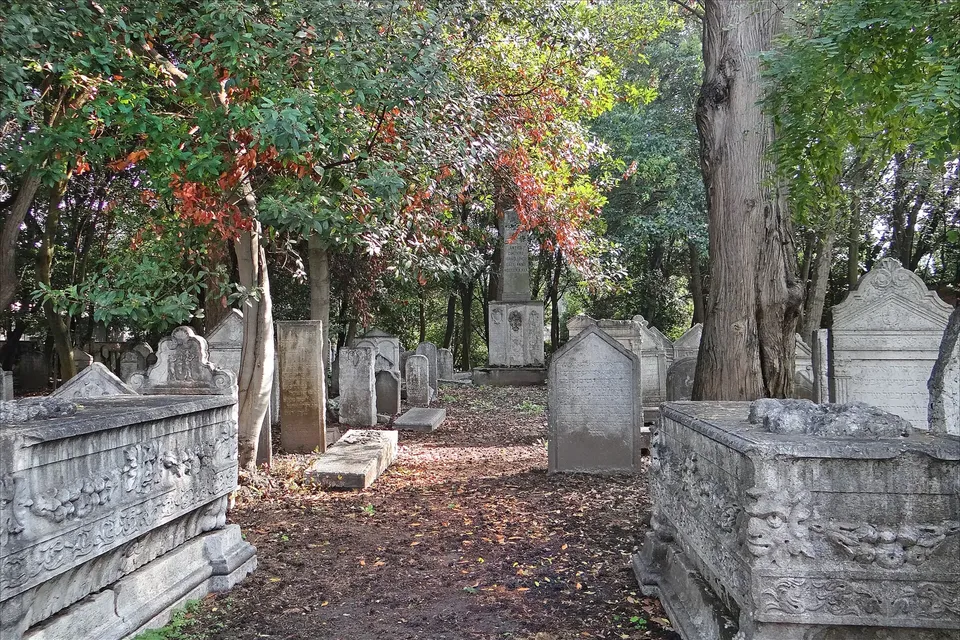
The oldest Jewish site in Venice is not in the Ghetto but on the Lido, the long sandbar that separates the lagoon from the sea. There, near the church of San Nicolò, the Republic granted land for a Jewish cemetery more than a century before the Ghetto existed. Its gravestones, carved with Hebrew verse and family emblems, are one of the richest records of Venetian Jewish life.
Key facts
- 1386: the Venetian magistrates grant the Jews a plot at San Nicolò del Lido.
- 1389: earliest recorded burial.
- Seventeenth–eighteenth centuries: the cemetery reaches its greatest extent; land is added in the eighteenth century.
- Later centuries: burials move to a newer Jewish cemetery nearby, still in use; the old one is gradually abandoned.
- 1999: a major restoration of the old cemetery is completed.
A grant older than the Ghetto
In the late fourteenth century, Jews were allowed to stay in Venice only temporarily, under agreements renewed every few years. They had nowhere in the city to bury their dead. In 1386 the Giudici del Piovego, the magistrates responsible for public land, granted representatives of the Jews a strip of uncultivated land on the Lido, next to the Benedictine monastery of San Nicolò. The monks contested the grant, and disputes over the boundary recurred for centuries. The earliest burial known from the records is that of a man named Samuel, son of Samson, who died in December 1389.
The location was practical and symbolic at once. The Lido was outside the inhabited city, as Jewish law and Venetian authorities both preferred for cemeteries, and could be reached by boat from anywhere in the lagoon. Funeral processions had to cross the water by boat.
Stones that speak several languages
After the creation of the Ghetto in 1516 and the arrival of the Levantine and Western Sephardic merchants, the cemetery grew and filled. Its stones reflect the diversity of the Ghetto. Ashkenazi tombstones tend to be upright slabs with Hebrew inscriptions; Sephardic ones are often horizontal or chest-shaped, sometimes with inscriptions in Spanish or Portuguese. Many carry family coats of arms, an Italian and Sephardic custom: a ladder, a lion, a tower, a rooster, or hands raised in blessing on the graves of members of priestly families.
The inscriptions are also literary works. Many epitaphs are composed in rhymed Hebrew verse, sometimes as acrostics on the name of the deceased, by poets and rabbis who also wrote for the synagogue and the press. A 2019 doctoral catalogue by Sofia Locatelli of the University of Bologna studied all of the roughly 1,240 stones and fragments that make up the old cemetery, analysing their art, poetry and lettering.
Neglect, damage and fragments
The cemetery suffered repeatedly. The area around San Nicolò, which guarded the main entrance to the lagoon, was used for military works over the centuries, and construction on the Lido in the modern era disturbed parts of the ground, so that graves were moved or lost. Burials gradually shifted to a newer Jewish cemetery a short distance away, which is still in use. By the twentieth century the old cemetery was largely abandoned, overgrown and difficult to visit.
Some stones were uncovered by chance during works in the area, and fragments ended up reused in walls or gathered along the cemetery's enclosure, where visitors can still see them today.
The restoration
From the 1970s, the Comitato per il Centro Storico Ebraico di Venezia and other committees for the safeguard of Venice began to raise funds for Jewish monuments. For the old cemetery, a long research and restoration campaign was carried out with UNESCO's private committees for Venice, the World Monuments Fund and the Venice in Peril Fund, among others. UNESCO describes the comprehensive restoration as completed in October 1999, reversing three and a half centuries of neglect. More than a thousand dated gravestones, from the mid-sixteenth to the early eighteenth century, were catalogued in the process, and a two-volume study of the community and its cemetery was published in Milan in 2000.
The work included clearing vegetation, recovering buried stones, consolidating and cleaning the surviving ones, and resetting them in place as far as their original position could be determined.
Reading a gravestone
A few elements help visitors read the stones even without knowing Hebrew. Most inscriptions open with the abbreviation pe-nun, "here lies", and close with a five-letter abbreviation meaning "may his (or her) soul be bound in the bond of life". Dates follow the Jewish calendar, counted from the creation of the world, so a year such as 5370 corresponds to 1609–1610. Symbols carry meaning too: a pitcher marks a Levite, who washed the hands of the priests; two hands with spread fingers mark a kohen, a descendant of the priestly family. Family emblems, often canting arms that play on the surname, were borrowed from Italian heraldry.
Visiting
The old cemetery is on the lagoon side of the Lido, near San Nicolò, reachable by vaporetto to the Lido and a walk or short bus ride. It is not freely accessible: visits are organised in guided groups, generally by arrangement with the Jewish Museum of Venice or the Jewish community, and in some summers special openings have been scheduled. Men are customarily asked to cover their heads. The cemetery is closed on the Sabbath and Jewish holidays.
The cemetery completes a visit to the Ghetto: the Ghetto shows how the living were confined; the Lido shows how, even before 1516, the Republic accepted that Jews could rest permanently on Venetian soil.
Sources
- Wikipedia, "History of the Jews in Venice" (grant of 1386, use from 1389, extent, 1999 restoration).
- UNESCO World Heritage Centre, activity on the restoration of the Jewish cemetery of the Lido.
- FAI – Fondo Ambiente Italiano, "Antico cimitero ebraico del Lido di Venezia".
- Sofia Locatelli, Le lapidi dell'Antico Cimitero Ebraico del Lido di Venezia, doctoral thesis, University of Bologna, 2019.
- Cesare Vivante, "Comitato per il centro storico ebraico di Venezia", Insula Quaderni, no. 13.
 Ghetto history
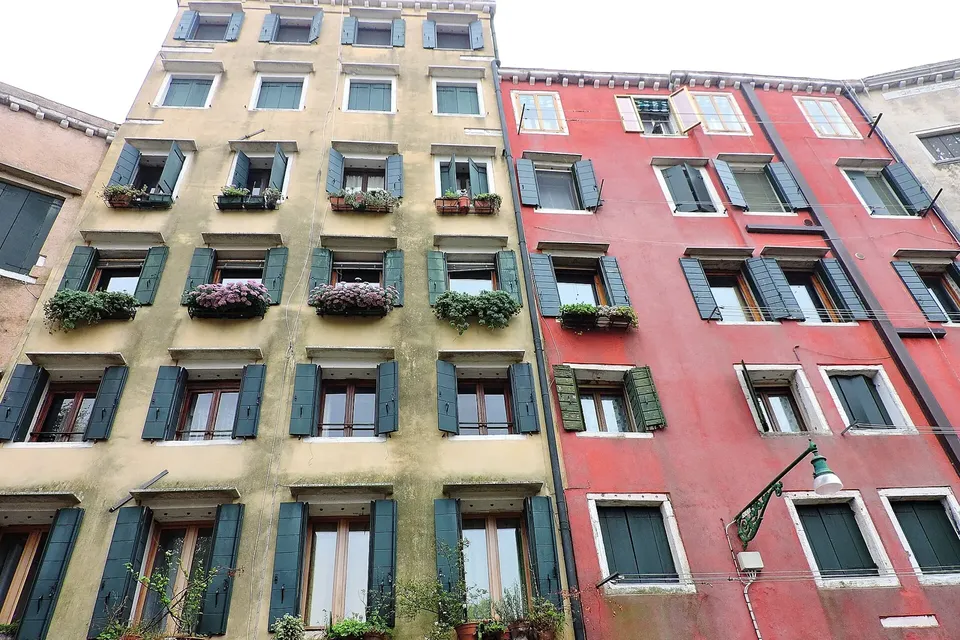
The Ghetto, 1516–1797
From the Senate decree of 29 March 1516 to the opening of the gates in July 1797.
 Places & institutions
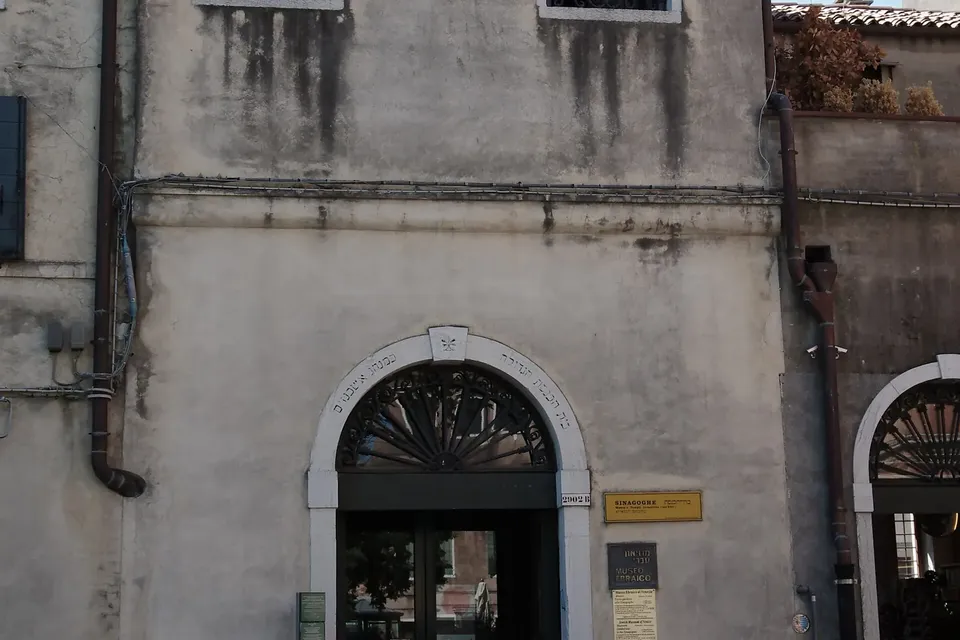
The Jewish Museum of Venice
Founded by the community after the war, closed for seven years, reopened in October 2026 with a route through all five synagogues.
 Lives & letters
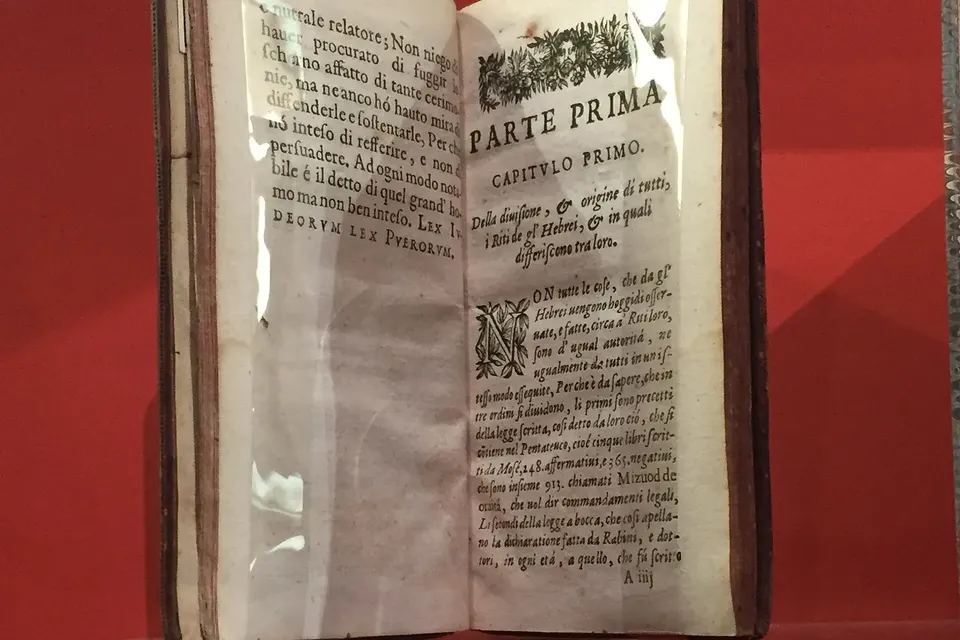
Leon Modena, rabbi of the Ghetto
Sermons that drew Christian audiences, a candid autobiography, and the Historia de' riti hebraici of 1637.