Not exile, diaspora? Jewish writers and modern American culture
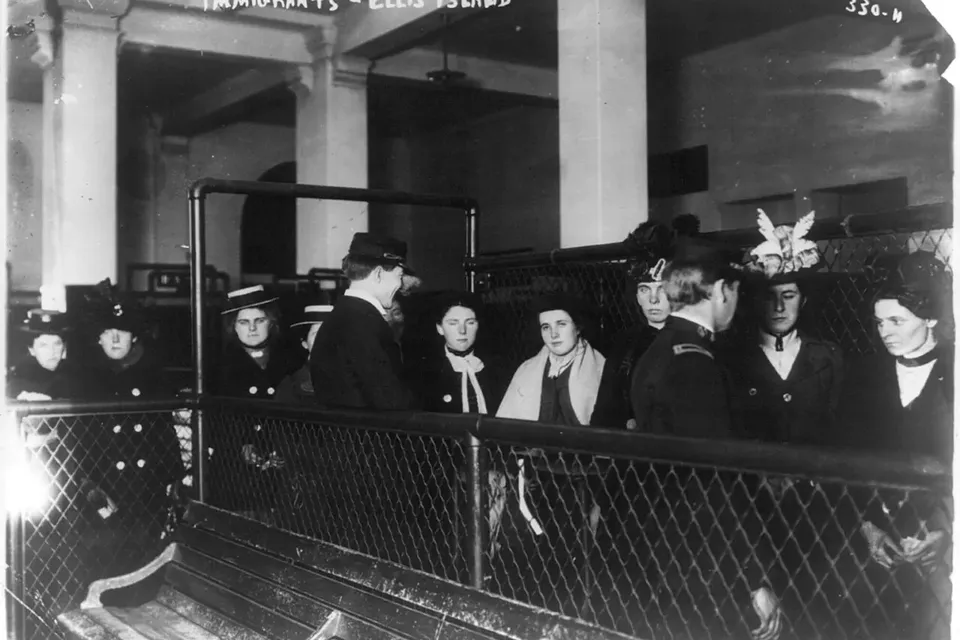
For centuries, Jewish tradition described life outside the Land of Israel as galut, exile: a punishment and a waiting. In twentieth-century America, a generation of writers began to describe it differently, as diaspora, a dispersion that could be a home in its own right. This shift, central to modern Jewish literature, has a surprising number of connections with Venice.
Two words for the same scattering
Hebrew has two words for life outside the land. Galut means exile and carries the weight of loss, sin and longing for redemption; it is the word of the liturgy, which prays daily for the ingathering of the exiles. Tefutzot, "dispersions", is closer to the Greek diaspora, a neutral term for a people scattered like seed. Choosing one word over the other is a statement about whether being away from the land is a wound to be healed or a condition that can be lived fully.
The Venetian Ghetto is a fitting place to think about this. For three centuries it was the very image of exile, a walled space where Jews lived on sufferance. Yet it was also a diaspora capital, linked by trade, print and family networks to Amsterdam, Salonica, Constantinople and the Holy Land, where Jews from many countries lived side by side and produced books for the whole Jewish world.
The immigrant generation
Between the 1880s and the 1920s, some two million Jews from Eastern Europe emigrated to the United States. The first literature they produced in English is full of the tension between old and new worlds. Abraham Cahan, editor of the Yiddish daily Forverts, published The Rise of David Levinsky in 1917: the story of an immigrant who becomes a rich garment manufacturer and feels emptier the more he succeeds. Anzia Yezierska wrote of young women breaking free from the patriarchal households of the Lower East Side. Henry Roth's Call It Sleep (1934), told through the eyes of a small boy in the tenements of New York, rendered Yiddish speech as lyrical English and the street as a frightening, exhilarating world.
For these writers, America was not exactly exile, but it was not yet home either. Their characters lose the old world without fully belonging to the new one.
The postwar flowering
After the Second World War, Jewish writers moved from the margins to the centre of American literature. Saul Bellow, who received the Nobel Prize in 1976, created voluble, intellectual heroes such as Augie March and Moses Herzog, for whom Jewishness was a sensibility rather than an observance. Bernard Malamud wrote moral fables in which suffering and compassion define what it means to be a Jew; a remark often attributed to Malamud himself holds that "all men are Jews". Grace Paley's stories caught the voices of New York neighbourhoods. Cynthia Ozick, by contrast, insisted that Jewish writing must remain rooted in Jewish ideas and the Hebrew tradition, or risk dissolving into general culture.
The Holocaust and the creation of the State of Israel in 1948 transformed the debate. With Europe's Jewish centres destroyed and a Jewish state now existing, American Jews had to decide whether their country was a temporary refuge, as classic Zionism held, or a durable centre of Jewish life. The critic Irving Howe's World of Our Fathers (1976), a history of the immigrant Jews of New York, was in part an elegy for a Yiddish culture that America had absorbed.
Philip Roth and "diasporism"
No writer pushed the question further than Philip Roth. From Goodbye, Columbus (1959) and Portnoy's Complaint (1969) onward, his characters are thoroughly American and thoroughly Jewish, and argue endlessly about what each of those means. In The Counterlife (1986) and especially Operation Shylock (1993), Roth staged confrontations between Israeli and American Jews and invented, through a double of himself, an ideology he called "Diasporism": the half-serious proposal that Jews return to Europe and treat the diaspora, not Israel, as their true home.
The title of Operation Shylock brings us back to Venice. Shakespeare's Merchant of Venice, set in a city that confined its Jews to a ghetto, has haunted Jewish writers for centuries. Roth, like many others, used Shylock as a mirror for the anxieties of Jews living among non-Jews, and in 2016 the five hundredth anniversary of the Venice Ghetto was marked, among other events, by a staging of the play in the Ghetto itself.
A scholarly turn
From the 1990s, scholars took up the idea that diaspora could be a positive model rather than a deficiency. In an influential 1993 essay, the brothers Daniel and Jonathan Boyarin argued that the rabbinic tradition, developed outside the land, offered a way of maintaining identity without territory or sovereignty, and that this experience had value for the modern world. Others answered that the diaspora's creativity has always depended on connections to a centre, whether Jerusalem, Babylon, or the great European communities.
The debate continues in literature. Younger American Jewish novelists have written about Israel, about the Soviet Jewish emigration, about Eastern European roots and about the place of Jews in American identity politics, keeping the question open.
Why it matters for Venice
The dispute between "exile" and "diaspora" is not only American. Venice's Jewish history shows both sides at once: confinement and cosmopolitanism, segregation and a Hebrew book trade that reached the whole world (see the Jewish book in Venice). Writers and scholars who visit the Ghetto today often find there a concrete image of the question that American Jewish literature has asked for a century: where, and how, can one be at home?
Sources
- Encyclopaedia Britannica, "Diaspora (Judaism)".
- Wikipedia, "Operation Shylock: A Confession" and "The Counterlife".
- Wikipedia, "The Rise of David Levinsky" and "Call It Sleep".
- Daniel Boyarin and Jonathan Boyarin, "Diaspora: Generation and the Ground of Jewish Identity", Critical Inquiry 19, no. 4 (1993).
- Irving Howe, World of Our Fathers, Harcourt Brace Jovanovich, 1976.
- Hana Wirth-Nesher (ed.), The Cambridge History of Jewish American Literature, Cambridge University Press, 2016.
 Lives & letters
Leon Modena, rabbi of the Ghetto
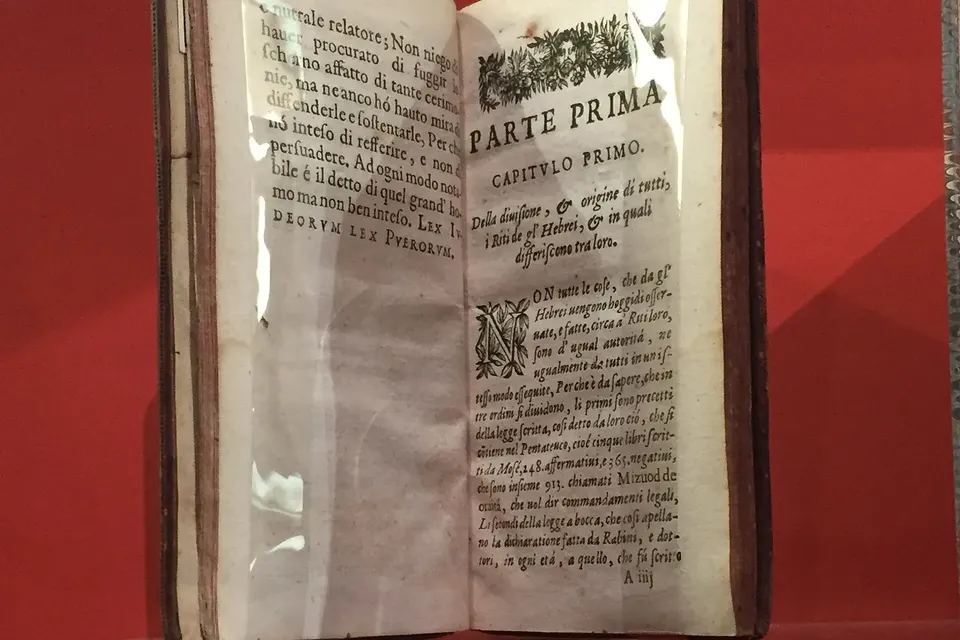
Sermons that drew Christian audiences, a candid autobiography, and the Historia de' riti hebraici of 1637.
 Books & Haggadah
The Jewish book: histories, media, metaphors
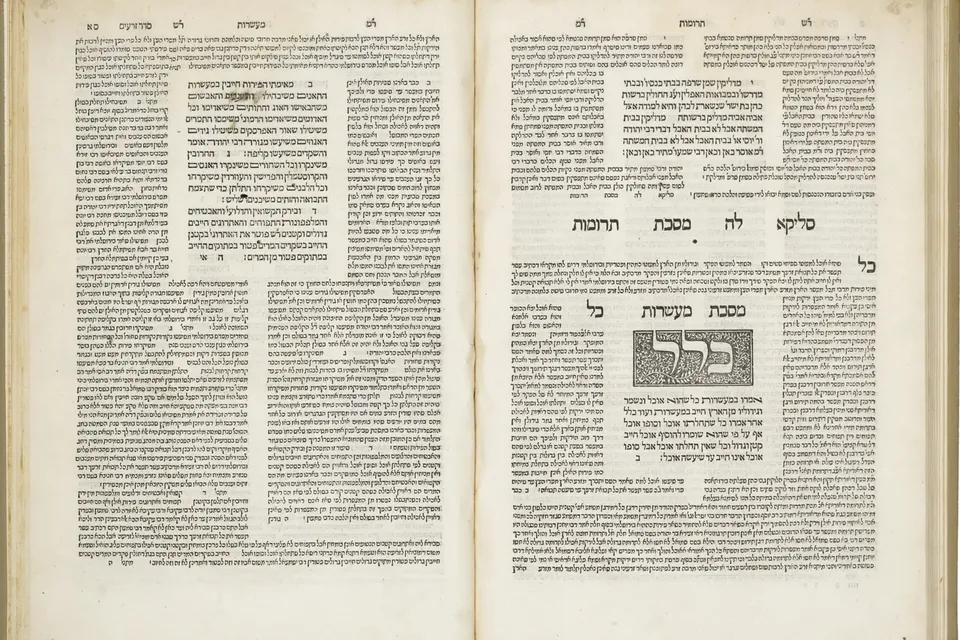
Bomberg's Talmud, the bonfire of 1553, the censors' pens and the idea of the book as a portable homeland.
 Ghetto history
The Ghetto, 1516–1797
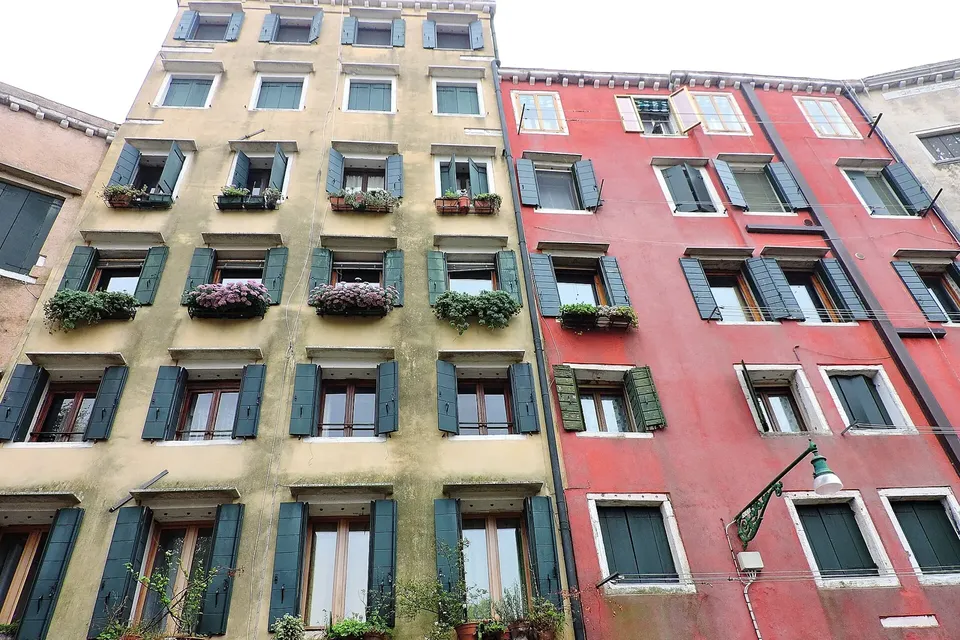
From the Senate decree of 29 March 1516 to the opening of the gates in July 1797.